
'%20fill='%23999999'%20fill-rule='nonzero'%3e%3cpath%20d='M89,17%20C89.571637,17%2090.0350404,17.4634034%2090.0350404,18.0350404%20L90.035,23.964%20L95.9649596,23.9649596%20C96.5365966,23.9649596%2097,24.428363%2097,25%20C97,25.571637%2096.5365966,26.0350404%2095.9649596,26.0350404%20L90.035,26.035%20L90.0350404,31.9649596%20C90.0350404,32.5365966%2089.571637,33%2089,33%20C88.428363,33%2087.9649596,32.5365966%2087.9649596,31.9649596%20L87.964,26.035%20L82.0350404,26.0350404%20C81.4634034,26.0350404%2081,25.571637%2081,25%20C81,24.428363%2081.4634034,23.9649596%2082.0350404,23.9649596%20L87.964,23.964%20L87.9649596,18.0350404%20C87.9649596,17.4634034%2088.428363,17%2089,17%20Z'%20id='形状结合'%20transform='translate(89.000000,%2025.000000)%20rotate(-315.000000)%20translate(-89.000000,%20-25.000000)%20'%3e%3c/path%3e%3c/g%3e%3c/g%3e%3c/svg%3e)
'%3e%3cg%20id='编组-6'%20transform='translate(1373.000000,%2025.000000)'%3e%3cg%20id='下拉备份-3'%20transform='translate(123.000000,%200.000000)'%3e%3crect%20id='矩形'%20x='0'%20y='0'%20width='24'%20height='24'%3e%3c/rect%3e%3cpath%20d='M17.6089435,8.9653235%20C17.896574,8.70700919%2018.5132174,8.78545894%2018.7616382,9.08454445%20C19.010059,9.38362996%2019.0492687,9.99880806%2018.7616382,10.2571224%20L12.5607696,15.8259798%20C12.3058327,16.0549327%2011.9289773,16.0583315%2011.6702596,15.8340113%20L5.24746896,10.2651538%20C4.95557272,10.0120663%205.00407468,9.38806562%205.24746896,9.08454445%20C5.49086324,8.78102329%206.13205521,8.71223591%206.42395145,8.9653235%20L12.102706,13.9843741%20L17.6089435,8.9653235%20Z'%20id='路径-2'%20fill='%23475288'%20fill-rule='nonzero'%3e%3c/path%3e%3c/g%3e%3c/g%3e%3c/g%3e%3c/g%3e%3c/svg%3e)
'%3e%3cg%20id='编组'%20transform='translate(0.000000,%2074.000000)'%3e%3cg%20id='编组-2'%20transform='translate(725.000000,%2030.000000)'%3e%3cg%20id='下拉备份'%20transform='translate(243.000000,%208.000000)'%3e%3crect%20id='矩形'%20fill='%23F4F4F4'%20x='0'%20y='0'%20width='24'%20height='24'%20rx='4'%3e%3c/rect%3e%3cpath%20d='M17.6089435,8.9653235%20C17.896574,8.70700919%2018.5132174,8.78545894%2018.7616382,9.08454445%20C19.010059,9.38362996%2019.0492687,9.99880806%2018.7616382,10.2571224%20L12.5607696,15.8259798%20C12.3058327,16.0549327%2011.9289773,16.0583315%2011.6702596,15.8340113%20L5.24746896,10.2651538%20C4.95557272,10.0120663%205.00407468,9.38806562%205.24746896,9.08454445%20C5.49086324,8.78102329%206.13205521,8.71223591%206.42395145,8.9653235%20L12.102706,13.9843741%20L17.6089435,8.9653235%20Z'%20id='路径-2'%20fill='%23475288'%20fill-rule='nonzero'%3e%3c/path%3e%3c/g%3e%3c/g%3e%3c/g%3e%3c/g%3e%3c/g%3e%3c/svg%3e)
'%20filter='url(%23filter-1)'%3e%3cg%20id='编组-2'%20transform='translate(337.000000,%2013.000000)'%3e%3crect%20id='矩形'%20x='0'%20y='0'%20width='28'%20height='28'%3e%3c/rect%3e%3cg%20id='编组'%20transform='translate(5.250000,%207.000000)'%20stroke='%23475288'%20stroke-linecap='round'%20stroke-width='1.75'%3e%3cpath%20d='M0,0.4375%20L17.5,0.4375%20M0,7.4375%20L17.5,7.4375%20M0,14.4375%20L17.5,14.4375'%20id='形状结合'%3e%3c/path%3e%3c/g%3e%3c/g%3e%3c/g%3e%3c/g%3e%3c/svg%3e)
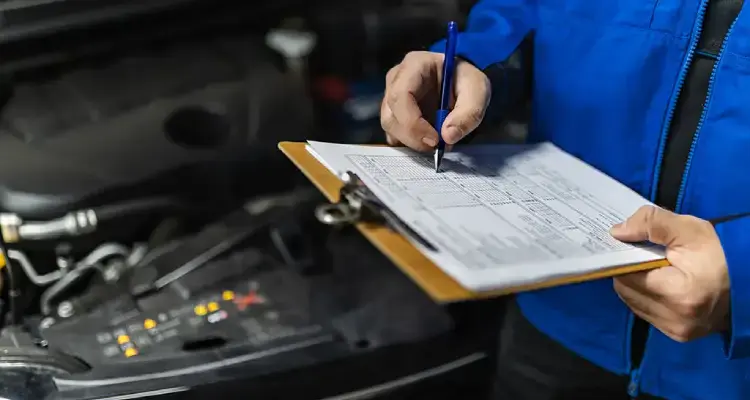
Keeping detailed maintenance records is one of the most overlooked yet impactful ways to protect your car’s value. When selling a used vehicle, buyers are more likely to pay top dollar if they can see that the car has been properly maintained throughout its life. Maintenance records not only demonstrate that the vehicle has been cared for but also provide transparency and build trust between the seller and potential buyers. A well-documented service history can differentiate your car from similar models on the market that lack verifiable maintenance, often translating into higher resale prices.
Related Article:
Used Car Value Enhancement: Cleaning, Photography & Maintenance
Why Maintenance Records Matter
Maintenance records are crucial because they provide a clear picture of a car’s mechanical history. They show that routine services like oil changes, brake inspections, tire rotations, and fluid replacements were performed on schedule. Records also help buyers assess the condition of major components, like the engine or transmission, which can heavily influence purchasing decisions. A car with complete documentation signals reliability and may even qualify for extended warranty options or trade-in incentives.
Additionally, maintenance records can protect you as a seller by demonstrating that the vehicle has been responsibly cared for. For example, if a buyer discovers a mechanical issue after purchase, your documented history can prove that the problem was not due to negligence. Beyond resale value, maintaining detailed records is also beneficial for your own reference, as it helps you track what services have been completed and plan future maintenance more effectively.
- Shows consistent upkeep and service intervals
- Builds buyer trust and increases resale value
- Helps track major repairs or part replacements
- Provides documentation for warranty or insurance purposes
What to Document
When creating maintenance records, it’s important to be comprehensive and organized. At minimum, each service entry should include the date, mileage, type of service performed, and the service provider or mechanic’s details. Receipts, invoices, and any written service notes are ideal to keep. Additionally, including records of parts replacements, tire rotations, and fluid changes helps provide a full picture of the vehicle’s maintenance history.
Some owners also choose to document inspections, diagnostic reports, and any aftermarket upgrades or modifications. Keeping such details ensures transparency and allows prospective buyers to understand both routine maintenance and any significant interventions. Comprehensive records make the vehicle more appealing because buyers can clearly see that the car has been cared for professionally and consistently.
- Date and mileage of each service
- Type of maintenance or repair performed
- Service provider or mechanic details
- Receipts, invoices, and diagnostic reports
Digital vs Physical Records
Maintaining records can be done either digitally, physically, or ideally a combination of both. Physical records like invoices and receipts are tangible proof of service and are often preferred by traditional buyers. However, digital records offer several advantages: they are easily backed up, can be organized by date or type of service, and are simple to share electronically. Many auto shops now provide digital service histories, making it easier to maintain a consistent record without paper clutter.
For maximum effectiveness, consider scanning or photographing all physical documents and storing them in a secure digital folder. Mobile apps designed for vehicle maintenance tracking can also simplify record keeping, sending reminders for upcoming services and allowing you to track all maintenance in one convenient place. Combining physical and digital methods ensures you won’t lose records while keeping them easily presentable to buyers.
- Physical copies are tangible proof and preferred by some buyers
- Digital records are easy to organize, backup, and share
- Use apps or cloud storage for convenience and security
- Combining both methods offers redundancy and reliability
Presenting Records to Buyers
When selling your car, presenting maintenance records effectively can enhance buyer confidence and justify a higher asking price. Organize the records chronologically or by service type, and provide both digital and physical copies if possible. Highlight major repairs, routine maintenance, and any aftermarket improvements that add value to the car. Presenting a clear, organized history demonstrates transparency and builds trust, reducing buyer hesitation and streamlining the negotiation process.
For in-person showings, keep physical documents neatly in a binder or folder for easy reference. For online listings, include scanned copies or digital summaries to accompany your vehicle description. Doing so not only supports the vehicle’s perceived value but also differentiates your listing from other similar vehicles on the market. Buyers are more likely to take your asking price seriously if they can verify that your car has been consistently maintained.
- Organize records by date or service type for clarity
- Provide both physical and digital copies when possible
- Highlight routine maintenance and major repairs
- Include records in online listings to enhance credibility
Long-Term Record Keeping
Long-term record keeping benefits both current ownership and future resale. By maintaining a complete history, you can track trends in component wear, identify recurring issues, and plan preventative maintenance. Over the life of the vehicle, detailed records demonstrate conscientious ownership, which is highly valued by buyers and can translate to higher resale prices.
To ensure longevity, back up digital records regularly and safely store physical copies in a secure location. Continue documenting all services, even minor ones, and update records promptly. Consistent maintenance documentation not only helps you stay organized and proactive about vehicle care but also provides an undeniable advantage when it comes time to sell or trade in the car. Buyers are reassured by evidence that the car has been meticulously maintained, reducing uncertainty and increasing perceived value.
- Track all maintenance consistently over the car’s life
- Back up digital records and securely store physical copies
- Document even minor repairs and inspections
- Use maintenance history as a selling point to increase resale value
Related Articles:
Used Car Value Enhancement: Cleaning, Photography & Maintenance
A Complete Car Maintenance Checklist: Monthly, Quarterly & Annual
How to Sell Your Car for the Most Money