
'%20fill='%23999999'%20fill-rule='nonzero'%3e%3cpath%20d='M89,17%20C89.571637,17%2090.0350404,17.4634034%2090.0350404,18.0350404%20L90.035,23.964%20L95.9649596,23.9649596%20C96.5365966,23.9649596%2097,24.428363%2097,25%20C97,25.571637%2096.5365966,26.0350404%2095.9649596,26.0350404%20L90.035,26.035%20L90.0350404,31.9649596%20C90.0350404,32.5365966%2089.571637,33%2089,33%20C88.428363,33%2087.9649596,32.5365966%2087.9649596,31.9649596%20L87.964,26.035%20L82.0350404,26.0350404%20C81.4634034,26.0350404%2081,25.571637%2081,25%20C81,24.428363%2081.4634034,23.9649596%2082.0350404,23.9649596%20L87.964,23.964%20L87.9649596,18.0350404%20C87.9649596,17.4634034%2088.428363,17%2089,17%20Z'%20id='形状结合'%20transform='translate(89.000000,%2025.000000)%20rotate(-315.000000)%20translate(-89.000000,%20-25.000000)%20'%3e%3c/path%3e%3c/g%3e%3c/g%3e%3c/svg%3e)
'%3e%3cg%20id='编组-6'%20transform='translate(1373.000000,%2025.000000)'%3e%3cg%20id='下拉备份-3'%20transform='translate(123.000000,%200.000000)'%3e%3crect%20id='矩形'%20x='0'%20y='0'%20width='24'%20height='24'%3e%3c/rect%3e%3cpath%20d='M17.6089435,8.9653235%20C17.896574,8.70700919%2018.5132174,8.78545894%2018.7616382,9.08454445%20C19.010059,9.38362996%2019.0492687,9.99880806%2018.7616382,10.2571224%20L12.5607696,15.8259798%20C12.3058327,16.0549327%2011.9289773,16.0583315%2011.6702596,15.8340113%20L5.24746896,10.2651538%20C4.95557272,10.0120663%205.00407468,9.38806562%205.24746896,9.08454445%20C5.49086324,8.78102329%206.13205521,8.71223591%206.42395145,8.9653235%20L12.102706,13.9843741%20L17.6089435,8.9653235%20Z'%20id='路径-2'%20fill='%23475288'%20fill-rule='nonzero'%3e%3c/path%3e%3c/g%3e%3c/g%3e%3c/g%3e%3c/g%3e%3c/svg%3e)
'%3e%3cg%20id='编组'%20transform='translate(0.000000,%2074.000000)'%3e%3cg%20id='编组-2'%20transform='translate(725.000000,%2030.000000)'%3e%3cg%20id='下拉备份'%20transform='translate(243.000000,%208.000000)'%3e%3crect%20id='矩形'%20fill='%23F4F4F4'%20x='0'%20y='0'%20width='24'%20height='24'%20rx='4'%3e%3c/rect%3e%3cpath%20d='M17.6089435,8.9653235%20C17.896574,8.70700919%2018.5132174,8.78545894%2018.7616382,9.08454445%20C19.010059,9.38362996%2019.0492687,9.99880806%2018.7616382,10.2571224%20L12.5607696,15.8259798%20C12.3058327,16.0549327%2011.9289773,16.0583315%2011.6702596,15.8340113%20L5.24746896,10.2651538%20C4.95557272,10.0120663%205.00407468,9.38806562%205.24746896,9.08454445%20C5.49086324,8.78102329%206.13205521,8.71223591%206.42395145,8.9653235%20L12.102706,13.9843741%20L17.6089435,8.9653235%20Z'%20id='路径-2'%20fill='%23475288'%20fill-rule='nonzero'%3e%3c/path%3e%3c/g%3e%3c/g%3e%3c/g%3e%3c/g%3e%3c/g%3e%3c/svg%3e)
'%20filter='url(%23filter-1)'%3e%3cg%20id='编组-2'%20transform='translate(337.000000,%2013.000000)'%3e%3crect%20id='矩形'%20x='0'%20y='0'%20width='28'%20height='28'%3e%3c/rect%3e%3cg%20id='编组'%20transform='translate(5.250000,%207.000000)'%20stroke='%23475288'%20stroke-linecap='round'%20stroke-width='1.75'%3e%3cpath%20d='M0,0.4375%20L17.5,0.4375%20M0,7.4375%20L17.5,7.4375%20M0,14.4375%20L17.5,14.4375'%20id='形状结合'%3e%3c/path%3e%3c/g%3e%3c/g%3e%3c/g%3e%3c/g%3e%3c/svg%3e)
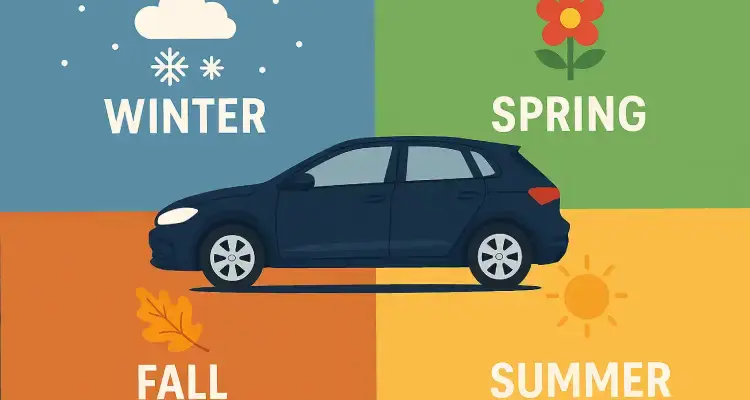
Vehicle maintenance isn’t just a matter of routine—it’s a proactive approach to safety, reliability, and preserving long-term value. Different seasons introduce unique challenges that affect your car’s performance, longevity, and safety. From winter’s harsh cold and road salt to summer’s high temperatures and extended driving conditions, failing to adjust maintenance practices can lead to costly repairs, poor efficiency, and safety hazards. Seasonal maintenance allows owners to anticipate these challenges, address wear and tear before it becomes serious, and maintain optimal vehicle function year-round. By understanding the unique demands of each season and following a structured plan, you can reduce unexpected breakdowns, improve resale value, and enjoy peace of mind knowing your car is prepared for any conditions.
In this guide, we’ll break down essential maintenance tasks for spring, summer, fall, and winter, along with weather-specific concerns that owners often overlook. These recommendations are designed to help you proactively manage your car’s condition rather than reactively repairing problems. With clear, actionable advice, you’ll be equipped to keep your vehicle performing at its best, regardless of seasonal conditions.
Related Article:
A Complete Car Maintenance Checklist: Monthly, Quarterly & Annual
Spring Maintenance
Spring is a season of renewal, not just for nature, but for your car. After months of exposure to cold, ice, and road salt, vehicles often need attention to reverse the effects of winter. Salt and moisture can cause corrosion on your car’s undercarriage, suspension, and brake components. Tires may have been worn unevenly due to icy road conditions, and battery performance can dip after repeated cold starts. Spring maintenance allows you to address these issues before they escalate.
Key spring tasks include washing the car thoroughly—especially the undercarriage—to remove corrosive residues, checking tire tread and pressure, inspecting brakes and suspension components, and ensuring fluids like engine oil, coolant, and windshield washer fluid are topped off and functioning properly. Worn wiper blades should be replaced to handle spring rain, and a general inspection of belts, hoses, and lights is crucial. Spring is also an excellent time to have your car professionally inspected if you are unsure about the condition of critical components.
By completing spring maintenance, you not only protect your vehicle from the lingering effects of winter but also improve performance, fuel efficiency, and safety. This proactive care ensures that minor problems, such as a small fluid leak or uneven tire wear, do not turn into major repairs later in the year. For instance, replacing worn tires or addressing brake issues early in spring prevents costly replacements and potential accidents down the road. Regular spring checkups also enhance resale value by demonstrating responsible ownership and a well-maintained vehicle.
- Remove road salt and debris from the undercarriage to prevent rust
- Check tire condition, pressure, and alignment after winter wear
- Inspect brakes, suspension, and steering components for early wear
- Replace windshield wiper blades and ensure all lights are operational
Summer Maintenance
Summer introduces a different set of challenges for vehicles. High temperatures can strain engines, transmissions, cooling systems, and tires. Long drives, often in hot weather, can exacerbate wear and tear. Neglecting summer maintenance can lead to overheating, decreased fuel efficiency, and potential mechanical failures during long trips. Preparing your car for summer conditions ensures it performs reliably, whether for daily commutes or extended vacations.
Critical summer maintenance includes checking the cooling system and radiator for leaks or corrosion, inspecting hoses and belts for wear, and ensuring proper coolant levels to prevent overheating. Tire pressure should be checked frequently, as heat can increase pressure and accelerate wear. Air conditioning systems and cabin filters should be serviced to maintain comfort and air quality. Battery health should also be assessed, as heat can reduce battery lifespan. Summer is an excellent time to schedule a professional tune-up if your vehicle is due for routine service, such as oil changes or fluid flushes.
Summer maintenance not only ensures comfort and safety but also extends the life of critical vehicle components. For example, regularly flushing and topping off the coolant prevents overheating that can damage the head gasket or engine block. Checking belts and hoses avoids breakdowns caused by sudden snapping or leaks. Proper tire care reduces the risk of blowouts during high-temperature driving, enhancing safety on highways. Additionally, preventive care during summer helps maintain resale value, as buyers prioritize well-maintained vehicles with documented upkeep.
- Inspect and top off all fluids including engine oil, coolant, and brake fluid
- Check tires for tread wear and adjust pressure for hot road conditions
- Ensure the air conditioning system is fully functional for comfort
- Perform battery and electrical system checks to prevent unexpected failures
Fall Maintenance
Fall serves as a transition period, preparing your car for the colder months ahead. As temperatures drop and days shorten, vehicles need attention to ensure safety and reliability during winter. Leaf buildup, wet roads, and early frost can create hazards, and components stressed during summer may require inspection and adjustment. Fall maintenance ensures your vehicle can handle upcoming weather challenges effectively.
Key fall maintenance tasks include inspecting tires and considering winter tires if you live in a region with snow or ice. Brakes, belts, and hoses should be checked for wear resulting from summer heat. Lights should be inspected and replaced as needed to ensure visibility during shorter days. Windshield washer fluid should be replaced with an antifreeze formula, and wipers should be checked or replaced to handle rainy or frosty conditions. Testing the heating system and defrosters is crucial for both comfort and safety during cold snaps.
Addressing fall maintenance proactively prevents emergencies once winter arrives. For example, brakes that were partially worn during summer will perform poorly on slick or icy roads unless inspected and serviced. Ensuring all lights work properly improves visibility for both you and other drivers. By completing fall maintenance, you also reduce the likelihood of costly repairs, such as suspension or brake system failures caused by neglect during seasonal transitions. Thorough fall inspections establish a reliable baseline for winter vehicle performance.
- Inspect tires for tread depth and consider switching to winter tires
- Check brakes, belts, and hoses for summer-related wear
- Replace or adjust lights and wipers for shorter, darker days
- Test heating system and defrosters for cold-weather readiness
Winter Maintenance
Winter conditions can be particularly harsh on vehicles. Cold temperatures, snow, ice, and road salt create challenges that affect performance, safety, and vehicle longevity. Winter maintenance focuses on ensuring traction, visibility, and mechanical reliability, reducing the risk of accidents and costly repairs.
Essential winter maintenance includes inspecting the battery, starter, and charging system for reliability in freezing temperatures. Antifreeze levels should be checked, and coolant may need to be flushed to ensure proper freezing protection. Winter tires or chains may be necessary for areas prone to snow and ice, providing the traction needed for safe driving. Brakes, windshield wipers, and defrosters must be fully operational to maintain safety in challenging conditions. Frequent washing helps remove salt that can cause rust and corrosion on the body and undercarriage.
Proactive winter care prevents breakdowns and ensures that your vehicle remains safe and efficient. For instance, addressing battery health avoids the common scenario where a car fails to start on a cold morning. Inspecting brakes and tires prevents accidents on icy roads. Maintaining fluids and antifreeze levels protects the engine and other critical components from freeze-related damage. Proper winter maintenance also enhances long-term vehicle value, making it more attractive to buyers when the season ends.
- Check battery, charging system, and starter for cold-weather reliability
- Maintain proper antifreeze levels and coolant condition
- Install winter tires or chains as necessary for safe driving
- Ensure brakes, windshield wipers, and defrosters are fully operational
Weather-Specific Concerns
Seasonal maintenance isn’t only about performing the same tasks at different times of year—it’s about adjusting your approach to the specific challenges each weather condition brings. For example, rainy seasons and high humidity increase the risk of rust and corrosion, particularly in areas with metal road bridges or near coastal regions. Extreme heat in summer can lead to tire blowouts, fluid evaporation, and overheating engines. Cold snaps in winter can weaken batteries, thicken oils, and create challenges for braking and traction. By tailoring your maintenance practices to these seasonal concerns, you can avoid unexpected failures, enhance performance, and ensure safety.
Proactive care, like using seasonal-appropriate fluids, protecting your car from the elements, and performing inspections aligned with seasonal conditions, not only prevents costly repairs but also improves fuel efficiency and extends the vehicle’s life. Regular maintenance aligned with seasonal requirements also ensures that your vehicle retains higher resale value, as buyers appreciate cars that have been cared for in all conditions.
- Address rust-prone areas with protective coatings or regular washing
- Monitor tire health, especially with temperature fluctuations
- Use antifreeze and engine oils suitable for local seasonal extremes
- Perform seasonal inspections to detect minor issues before they become major repairs
Related Article:
Common Used Car Problems by Age & Mileage: What to Expect?