'%20fill='%23999999'%20fill-rule='nonzero'%3e%3cpath%20d='M89,17%20C89.571637,17%2090.0350404,17.4634034%2090.0350404,18.0350404%20L90.035,23.964%20L95.9649596,23.9649596%20C96.5365966,23.9649596%2097,24.428363%2097,25%20C97,25.571637%2096.5365966,26.0350404%2095.9649596,26.0350404%20L90.035,26.035%20L90.0350404,31.9649596%20C90.0350404,32.5365966%2089.571637,33%2089,33%20C88.428363,33%2087.9649596,32.5365966%2087.9649596,31.9649596%20L87.964,26.035%20L82.0350404,26.0350404%20C81.4634034,26.0350404%2081,25.571637%2081,25%20C81,24.428363%2081.4634034,23.9649596%2082.0350404,23.9649596%20L87.964,23.964%20L87.9649596,18.0350404%20C87.9649596,17.4634034%2088.428363,17%2089,17%20Z'%20id='形状结合'%20transform='translate(89.000000,%2025.000000)%20rotate(-315.000000)%20translate(-89.000000,%20-25.000000)%20'%3e%3c/path%3e%3c/g%3e%3c/g%3e%3c/svg%3e)
'%3e%3cg%20id='编组-6'%20transform='translate(1373.000000,%2025.000000)'%3e%3cg%20id='下拉备份-3'%20transform='translate(123.000000,%200.000000)'%3e%3crect%20id='矩形'%20x='0'%20y='0'%20width='24'%20height='24'%3e%3c/rect%3e%3cpath%20d='M17.6089435,8.9653235%20C17.896574,8.70700919%2018.5132174,8.78545894%2018.7616382,9.08454445%20C19.010059,9.38362996%2019.0492687,9.99880806%2018.7616382,10.2571224%20L12.5607696,15.8259798%20C12.3058327,16.0549327%2011.9289773,16.0583315%2011.6702596,15.8340113%20L5.24746896,10.2651538%20C4.95557272,10.0120663%205.00407468,9.38806562%205.24746896,9.08454445%20C5.49086324,8.78102329%206.13205521,8.71223591%206.42395145,8.9653235%20L12.102706,13.9843741%20L17.6089435,8.9653235%20Z'%20id='路径-2'%20fill='%23475288'%20fill-rule='nonzero'%3e%3c/path%3e%3c/g%3e%3c/g%3e%3c/g%3e%3c/g%3e%3c/svg%3e)
'%3e%3cg%20id='编组'%20transform='translate(0.000000,%2074.000000)'%3e%3cg%20id='编组-2'%20transform='translate(725.000000,%2030.000000)'%3e%3cg%20id='下拉备份'%20transform='translate(243.000000,%208.000000)'%3e%3crect%20id='矩形'%20fill='%23F4F4F4'%20x='0'%20y='0'%20width='24'%20height='24'%20rx='4'%3e%3c/rect%3e%3cpath%20d='M17.6089435,8.9653235%20C17.896574,8.70700919%2018.5132174,8.78545894%2018.7616382,9.08454445%20C19.010059,9.38362996%2019.0492687,9.99880806%2018.7616382,10.2571224%20L12.5607696,15.8259798%20C12.3058327,16.0549327%2011.9289773,16.0583315%2011.6702596,15.8340113%20L5.24746896,10.2651538%20C4.95557272,10.0120663%205.00407468,9.38806562%205.24746896,9.08454445%20C5.49086324,8.78102329%206.13205521,8.71223591%206.42395145,8.9653235%20L12.102706,13.9843741%20L17.6089435,8.9653235%20Z'%20id='路径-2'%20fill='%23475288'%20fill-rule='nonzero'%3e%3c/path%3e%3c/g%3e%3c/g%3e%3c/g%3e%3c/g%3e%3c/g%3e%3c/svg%3e)
'%20filter='url(%23filter-1)'%3e%3cg%20id='编组-2'%20transform='translate(337.000000,%2013.000000)'%3e%3crect%20id='矩形'%20x='0'%20y='0'%20width='28'%20height='28'%3e%3c/rect%3e%3cg%20id='编组'%20transform='translate(5.250000,%207.000000)'%20stroke='%23475288'%20stroke-linecap='round'%20stroke-width='1.75'%3e%3cpath%20d='M0,0.4375%20L17.5,0.4375%20M0,7.4375%20L17.5,7.4375%20M0,14.4375%20L17.5,14.4375'%20id='形状结合'%3e%3c/path%3e%3c/g%3e%3c/g%3e%3c/g%3e%3c/g%3e%3c/svg%3e)
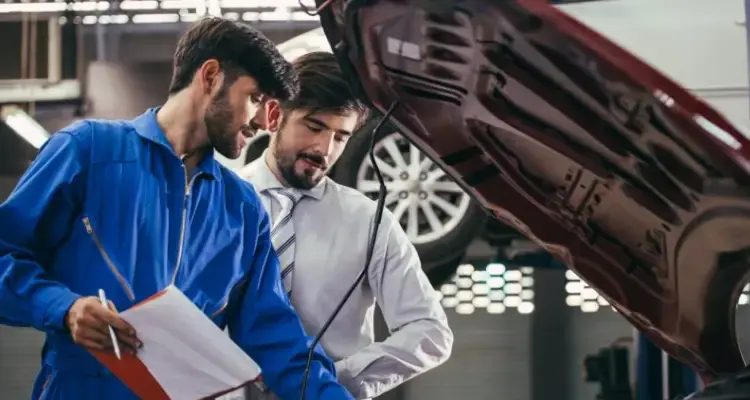
Owning a car isn’t just about getting from point A to B—it’s an investment. The longer your vehicle lasts, the more value you get, and the less money you waste on avoidable repairs. Preventive maintenance is the key to extending a car’s lifespan, keeping it reliable, and preserving resale value.
In this guide, we’ll cover the benefits of preventive maintenance, how your driving habits affect longevity, when to replace versus repair, the importance of fluid changes, and strategies for long-term value preservation.
Related Article:
A Complete Car Maintenance Checklist: Monthly, Quarterly & Annual
Preventive Maintenance Benefits
Preventive maintenance helps catch small problems before they turn into expensive repairs. Routine tasks like oil changes, fluid top-ups, and inspections reduce wear on critical components and can significantly extend engine life.
Besides reliability, preventive maintenance improves safety. Properly maintained brakes, suspension, and tires reduce the likelihood of accidents. Ignoring small issues can snowball into serious failures over time.
Financially, preventive maintenance saves money. For instance, replacing a $50 serpentine belt proactively is far cheaper than paying $500 for engine damage if it snaps. Similarly, maintaining tires and brakes reduces long-term replacement costs.
Regular maintenance also keeps your vehicle performing smoothly. Well-maintained cars accelerate better, handle well, and consume less fuel, making daily driving more comfortable and efficient.
Driving Habits & Longevity
How you drive can have a major impact on how long your car lasts. Aggressive acceleration, frequent hard braking, or constant high-speed driving increases wear on the engine, transmission, brakes, and tires.
Take Maria, for example. She used to accelerate hard from every stoplight. Within three years, she needed new brake pads and tires twice as often as her friend who drove smoothly. Small changes in driving style could have saved her hundreds of dollars.
Short trips, where the engine doesn’t reach full operating temperature, also cause long-term wear, especially in the engine and exhaust system. Combining careful driving with preventive maintenance maximizes your car’s life.
Eco-driving, like gradual acceleration and gentle braking, reduces stress on mechanical parts and improves fuel efficiency. These small adjustments translate into years of extra lifespan for your vehicle.
Replace vs Repair Decisions
Knowing when to repair or replace a part is critical. Some components, like oil filters or wipers, are routine replacements. Others, like alternators or transmission components, need careful evaluation based on cost, age, and expected lifespan.
Example: Replacing a $150 water pump before it fails is often cheaper than fixing engine damage caused by a broken pump. Proactive replacements prevent cascading failures.
When evaluating repairs, consider the car’s age, mileage, and condition. For older vehicles, some expensive repairs may not make financial sense, whereas for a low-mileage, well-maintained car, replacement is usually worth it.
Maintenance records help guide these decisions. Tracking parts age and usage allows you to plan repairs and replacements efficiently.
Fluid Changes & Replacements
Fluids are the lifeblood of your car. Engine oil, transmission fluid, brake fluid, coolant, and power steering fluid need regular replacement or topping up. Dirty or low fluids accelerate component wear and reduce performance.
· Engine oil should be changed every 5,000–7,500 miles, depending on the manufacturer.
· Transmission fluid varies—usually every 30,000–60,000 miles.
· Brake fluid should be replaced every 2 years to maintain braking efficiency.
· Coolant replacement every 2–3 years prevents overheating and corrosion.
Regular fluid maintenance keeps your engine and transmission running smoothly and prevents expensive failures. Ignoring fluids is one of the most common causes of premature engine wear.
Example Table: Recommended Fluid Change Intervals
| Fluid | Recommended Interval | Notes |
|---|---|---|
| Engine Oil | Every 5,000–7,500 miles | Use manufacturer-specified oil type |
| Transmission Fluid | Every 30,000–60,000 miles | Automatic vs manual fluid differs |
| Brake Fluid | Every 2 years | Moisture absorption reduces braking efficiency |
| Coolant | Every 2–3 years | Prevents overheating and corrosion |
Long-Term Value Preservation
Preventive maintenance protects resale or trade-in value. Cars with documented, regular maintenance are more appealing to buyers and often command higher prices. A well-maintained car signals reliability and reduces perceived risk.
Example: Two identical 2017 Toyota Corollas—one with complete maintenance records and one without—can have a $1,500–$2,000 price difference in the used market.
Regular cleaning, minor repairs, and preventive service show you take care of your investment. Even cosmetic maintenance can influence buyer perception and long-term value.
Additionally, preventive maintenance reduces the likelihood of breakdowns, improving daily reliability. Peace of mind is invaluable, especially for family or commuting vehicles.
Related Articles:
A Complete Car Maintenance Checklist: Monthly, Quarterly & Annual
Seasonal Maintenance Recommendations: Spring, Summer, Fall & Winter
Used Car Value Enhancement: Cleaning, Photography & Maintenance
Conclusion
Preventive maintenance is the most effective way to extend your vehicle’s lifespan. Combining regular checks, careful driving habits, informed replace-or-repair decisions, and timely fluid maintenance ensures reliability, safety, and long-term value. Investing attention today protects your car for years, reduces repair costs, and preserves resale value.