'%20fill='%23999999'%20fill-rule='nonzero'%3e%3cpath%20d='M89,17%20C89.571637,17%2090.0350404,17.4634034%2090.0350404,18.0350404%20L90.035,23.964%20L95.9649596,23.9649596%20C96.5365966,23.9649596%2097,24.428363%2097,25%20C97,25.571637%2096.5365966,26.0350404%2095.9649596,26.0350404%20L90.035,26.035%20L90.0350404,31.9649596%20C90.0350404,32.5365966%2089.571637,33%2089,33%20C88.428363,33%2087.9649596,32.5365966%2087.9649596,31.9649596%20L87.964,26.035%20L82.0350404,26.0350404%20C81.4634034,26.0350404%2081,25.571637%2081,25%20C81,24.428363%2081.4634034,23.9649596%2082.0350404,23.9649596%20L87.964,23.964%20L87.9649596,18.0350404%20C87.9649596,17.4634034%2088.428363,17%2089,17%20Z'%20id='形状结合'%20transform='translate(89.000000,%2025.000000)%20rotate(-315.000000)%20translate(-89.000000,%20-25.000000)%20'%3e%3c/path%3e%3c/g%3e%3c/g%3e%3c/svg%3e)
'%3e%3cg%20id='编组-6'%20transform='translate(1373.000000,%2025.000000)'%3e%3cg%20id='下拉备份-3'%20transform='translate(123.000000,%200.000000)'%3e%3crect%20id='矩形'%20x='0'%20y='0'%20width='24'%20height='24'%3e%3c/rect%3e%3cpath%20d='M17.6089435,8.9653235%20C17.896574,8.70700919%2018.5132174,8.78545894%2018.7616382,9.08454445%20C19.010059,9.38362996%2019.0492687,9.99880806%2018.7616382,10.2571224%20L12.5607696,15.8259798%20C12.3058327,16.0549327%2011.9289773,16.0583315%2011.6702596,15.8340113%20L5.24746896,10.2651538%20C4.95557272,10.0120663%205.00407468,9.38806562%205.24746896,9.08454445%20C5.49086324,8.78102329%206.13205521,8.71223591%206.42395145,8.9653235%20L12.102706,13.9843741%20L17.6089435,8.9653235%20Z'%20id='路径-2'%20fill='%23475288'%20fill-rule='nonzero'%3e%3c/path%3e%3c/g%3e%3c/g%3e%3c/g%3e%3c/g%3e%3c/svg%3e)
'%3e%3cg%20id='编组'%20transform='translate(0.000000,%2074.000000)'%3e%3cg%20id='编组-2'%20transform='translate(725.000000,%2030.000000)'%3e%3cg%20id='下拉备份'%20transform='translate(243.000000,%208.000000)'%3e%3crect%20id='矩形'%20fill='%23F4F4F4'%20x='0'%20y='0'%20width='24'%20height='24'%20rx='4'%3e%3c/rect%3e%3cpath%20d='M17.6089435,8.9653235%20C17.896574,8.70700919%2018.5132174,8.78545894%2018.7616382,9.08454445%20C19.010059,9.38362996%2019.0492687,9.99880806%2018.7616382,10.2571224%20L12.5607696,15.8259798%20C12.3058327,16.0549327%2011.9289773,16.0583315%2011.6702596,15.8340113%20L5.24746896,10.2651538%20C4.95557272,10.0120663%205.00407468,9.38806562%205.24746896,9.08454445%20C5.49086324,8.78102329%206.13205521,8.71223591%206.42395145,8.9653235%20L12.102706,13.9843741%20L17.6089435,8.9653235%20Z'%20id='路径-2'%20fill='%23475288'%20fill-rule='nonzero'%3e%3c/path%3e%3c/g%3e%3c/g%3e%3c/g%3e%3c/g%3e%3c/g%3e%3c/svg%3e)
'%20filter='url(%23filter-1)'%3e%3cg%20id='编组-2'%20transform='translate(337.000000,%2013.000000)'%3e%3crect%20id='矩形'%20x='0'%20y='0'%20width='28'%20height='28'%3e%3c/rect%3e%3cg%20id='编组'%20transform='translate(5.250000,%207.000000)'%20stroke='%23475288'%20stroke-linecap='round'%20stroke-width='1.75'%3e%3cpath%20d='M0,0.4375%20L17.5,0.4375%20M0,7.4375%20L17.5,7.4375%20M0,14.4375%20L17.5,14.4375'%20id='形状结合'%3e%3c/path%3e%3c/g%3e%3c/g%3e%3c/g%3e%3c/g%3e%3c/svg%3e)

Buying a used car can be exciting, but it’s also fraught with potential pitfalls. Even experienced buyers sometimes make costly errors that could have been easily avoided with preparation and careful research. Knowing the common mistakes in advance helps you make confident decisions, save money, and prevent post-purchase regrets.
In this guide, we’ll walk through the most frequent errors buyers make—from skipping professional inspections to poor financing decisions—and provide actionable advice on how to avoid them.
Related Articles (Overview): How to Thoroughly Inspect a Used Car Before Buying It?, Why is it Necessary to Check a Vehicle's History Report?, How to Apply Used Car Loans?
Skipping Professional Inspection: Don’t Gamble on Condition
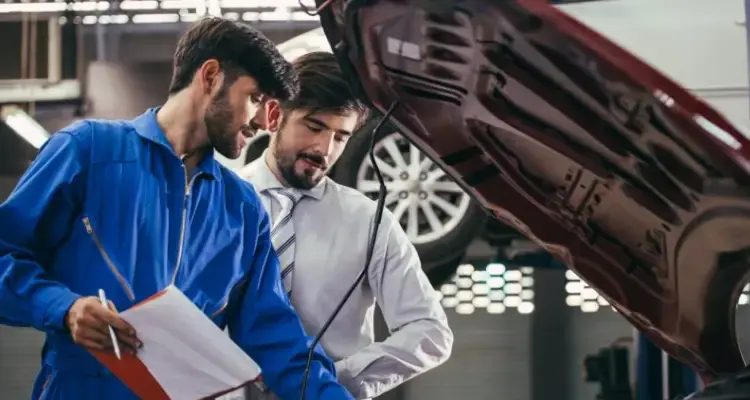
One of the biggest mistakes buyers make is assuming that a visual inspection or a short test drive is enough. Even well-maintained vehicles can have hidden mechanical issues that only a professional mechanic can detect. Skipping this step could cost you thousands in unexpected repairs.
Example: A buyer purchases a 2016 Honda Accord without a pre-purchase inspection. A few weeks later, the car develops a transmission issue that costs $2,500 to repair. Had a professional inspection been performed, this problem would have been identified before the sale, potentially saving money or avoiding the purchase altogether.
Invest in a certified mechanic to perform a full inspection. They will check the engine, transmission, brakes, suspension, and other critical systems. While this may cost $100–$200 upfront, it’s a fraction of the potential repair costs later.
Related Article: How to Thoroughly Inspect a Used Car Before Buying It?
Ignoring Vehicle History: Know What You’re Buying
Another common mistake is failing to check the car’s history. Accidents, flood damage, salvage titles, and odometer discrepancies can drastically affect a vehicle’s value and safety. Relying solely on the seller’s word is risky.
By obtaining a vehicle history report using the VIN, you gain insight into the car’s past. This includes accident records, title status, and service history. For example, a 2017 Toyota RAV4 may appear perfect, but the report might reveal it was previously involved in a minor collision. Knowing this helps you negotiate the price or decide to walk away.
Related Article: Why is it Necessary to Check a Vehicle's History Report?
Poor Financing Decisions: Don’t Overpay in Interest
Many buyers focus solely on the purchase price and overlook the cost of financing. Accepting high-interest loans or failing to understand loan terms can make a seemingly affordable car much more expensive over time.
Consider the following: a $15,000 car financed at 15% interest over 5 years will cost roughly $19,500 total, while the same car financed at 6% will cost around $16,900. That’s a difference of $2,600—a significant amount you could save with careful planning.
Compare financing options from banks, credit unions, online lenders, and dealership offers. Check your credit score in advance and consider getting pre-approved. Even negotiating the loan terms can save hundreds or thousands.
Related Article: How to Apply Used Car Loans?
Negotiation Mistakes: Know How to Negotiate
Negotiation is an essential skill in used car buying. Many buyers either accept the first offer or fail to leverage information about market value, condition, or repairs. Understanding the market and your bargaining room can make a huge difference.
Example: A 2018 Honda Civic is listed at $18,000. Research shows similar models in your area are selling for $17,000–$17,500. By pointing out minor cosmetic issues and maintenance needs, you can negotiate a fair price closer to $17,200 instead of paying full asking price.
Always be prepared with comparable listings, vehicle condition reports, and maintenance documentation. Don’t be afraid to walk away if the seller won’t meet your target price—sometimes patience pays off.
Related Article: 7 Tips for Negotiating the Price of a Used Car
Post-Purchase Regrets: Plan Ahead
Even after a purchase, buyers can experience regrets if they didn’t plan for insurance, registration, or long-term maintenance costs. Budgeting for ownership expenses and understanding what to expect with your specific car model reduces surprises.
For example, buying a 2015 BMW X3 with 80,000 miles might seem like a bargain at $18,000, but high maintenance costs and premium parts could result in hundreds per month in upkeep. Research ownership costs ahead of time to avoid buyer’s remorse.
Maintaining proper documentation, keeping a log of service records, and understanding warranty or extended coverage options also help ensure a smooth ownership experience.
Conclusion: Avoiding Mistakes Means Smarter Buying
By performing a professional inspection, checking the vehicle history, making informed financing decisions, negotiating effectively, and planning for post-purchase ownership, you can avoid the most common used car buying mistakes. Preparation, research, and diligence not only save money but also prevent stress and frustration.
Following these strategies ensures that your next used car purchase is a positive experience, with a reliable vehicle at a fair price.