
'%20fill='%23999999'%20fill-rule='nonzero'%3e%3cpath%20d='M89,17%20C89.571637,17%2090.0350404,17.4634034%2090.0350404,18.0350404%20L90.035,23.964%20L95.9649596,23.9649596%20C96.5365966,23.9649596%2097,24.428363%2097,25%20C97,25.571637%2096.5365966,26.0350404%2095.9649596,26.0350404%20L90.035,26.035%20L90.0350404,31.9649596%20C90.0350404,32.5365966%2089.571637,33%2089,33%20C88.428363,33%2087.9649596,32.5365966%2087.9649596,31.9649596%20L87.964,26.035%20L82.0350404,26.0350404%20C81.4634034,26.0350404%2081,25.571637%2081,25%20C81,24.428363%2081.4634034,23.9649596%2082.0350404,23.9649596%20L87.964,23.964%20L87.9649596,18.0350404%20C87.9649596,17.4634034%2088.428363,17%2089,17%20Z'%20id='形状结合'%20transform='translate(89.000000,%2025.000000)%20rotate(-315.000000)%20translate(-89.000000,%20-25.000000)%20'%3e%3c/path%3e%3c/g%3e%3c/g%3e%3c/svg%3e)
'%3e%3cg%20id='编组-6'%20transform='translate(1373.000000,%2025.000000)'%3e%3cg%20id='下拉备份-3'%20transform='translate(123.000000,%200.000000)'%3e%3crect%20id='矩形'%20x='0'%20y='0'%20width='24'%20height='24'%3e%3c/rect%3e%3cpath%20d='M17.6089435,8.9653235%20C17.896574,8.70700919%2018.5132174,8.78545894%2018.7616382,9.08454445%20C19.010059,9.38362996%2019.0492687,9.99880806%2018.7616382,10.2571224%20L12.5607696,15.8259798%20C12.3058327,16.0549327%2011.9289773,16.0583315%2011.6702596,15.8340113%20L5.24746896,10.2651538%20C4.95557272,10.0120663%205.00407468,9.38806562%205.24746896,9.08454445%20C5.49086324,8.78102329%206.13205521,8.71223591%206.42395145,8.9653235%20L12.102706,13.9843741%20L17.6089435,8.9653235%20Z'%20id='路径-2'%20fill='%23475288'%20fill-rule='nonzero'%3e%3c/path%3e%3c/g%3e%3c/g%3e%3c/g%3e%3c/g%3e%3c/svg%3e)
'%3e%3cg%20id='编组'%20transform='translate(0.000000,%2074.000000)'%3e%3cg%20id='编组-2'%20transform='translate(725.000000,%2030.000000)'%3e%3cg%20id='下拉备份'%20transform='translate(243.000000,%208.000000)'%3e%3crect%20id='矩形'%20fill='%23F4F4F4'%20x='0'%20y='0'%20width='24'%20height='24'%20rx='4'%3e%3c/rect%3e%3cpath%20d='M17.6089435,8.9653235%20C17.896574,8.70700919%2018.5132174,8.78545894%2018.7616382,9.08454445%20C19.010059,9.38362996%2019.0492687,9.99880806%2018.7616382,10.2571224%20L12.5607696,15.8259798%20C12.3058327,16.0549327%2011.9289773,16.0583315%2011.6702596,15.8340113%20L5.24746896,10.2651538%20C4.95557272,10.0120663%205.00407468,9.38806562%205.24746896,9.08454445%20C5.49086324,8.78102329%206.13205521,8.71223591%206.42395145,8.9653235%20L12.102706,13.9843741%20L17.6089435,8.9653235%20Z'%20id='路径-2'%20fill='%23475288'%20fill-rule='nonzero'%3e%3c/path%3e%3c/g%3e%3c/g%3e%3c/g%3e%3c/g%3e%3c/g%3e%3c/svg%3e)
'%20filter='url(%23filter-1)'%3e%3cg%20id='编组-2'%20transform='translate(337.000000,%2013.000000)'%3e%3crect%20id='矩形'%20x='0'%20y='0'%20width='28'%20height='28'%3e%3c/rect%3e%3cg%20id='编组'%20transform='translate(5.250000,%207.000000)'%20stroke='%23475288'%20stroke-linecap='round'%20stroke-width='1.75'%3e%3cpath%20d='M0,0.4375%20L17.5,0.4375%20M0,7.4375%20L17.5,7.4375%20M0,14.4375%20L17.5,14.4375'%20id='形状结合'%3e%3c/path%3e%3c/g%3e%3c/g%3e%3c/g%3e%3c/g%3e%3c/svg%3e)
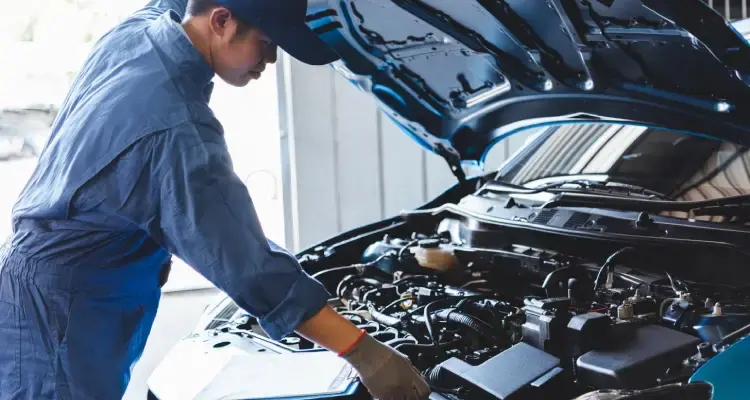
Keeping your car in top condition isn’t just about avoiding breakdowns—it’s about ensuring safety, reliability, and long-term value. Regular maintenance can prevent costly repairs, extend your vehicle’s lifespan, and improve resale value if you decide to sell. Many car owners underestimate how much small, consistent upkeep matters, but it truly adds up over time.
In this comprehensive guide, we’ll explore why maintenance is important, outline an effective maintenance schedule, compare DIY versus professional servicing, discuss record-keeping, and explain how proper maintenance can save you money in the long run.
Related Article:
A Complete Car Maintenance Checklist: Monthly, Quarterly & Annual
Importance of Regular Maintenance
Regular maintenance is the foundation of a reliable car. Skipping basic service can lead to small issues escalating into expensive repairs. For example, ignoring oil changes can cause engine wear that eventually requires a rebuild. Similarly, worn brake pads or old tires can compromise safety and cost more in the long term.
Maintenance also protects resale value. Cars with documented service histories are far more attractive to buyers because they indicate responsible ownership. Additionally, regular check-ups improve fuel efficiency, reduce emissions, and keep your vehicle running as designed by the manufacturer.
Many drivers delay maintenance due to cost or inconvenience, but even a few hours per month for inspections and minor upkeep can prevent major disruptions and keep repair bills manageable.
- Extends the lifespan of engine and transmission components
- Maintains fuel efficiency and performance
- Prevents small issues from becoming costly problems
- Increases resale value and buyer confidence
Maintenance Schedule Overview
Every vehicle has a manufacturer-recommended maintenance schedule, typically listed in the owner’s manual. This schedule outlines when to replace fluids, inspect brakes, rotate tires, and check other critical components. Sticking to this schedule is essential to ensure optimal performance and avoid voiding warranties.
Maintenance can be divided into regular, periodic, and annual checks:
- Regular checks: Oil level, tire pressure, windshield washer fluid, and lights (monthly)
- Periodic maintenance: Oil changes, brake inspection, tire rotation, air filter replacement (every 3-6 months or based on mileage)
- Annual maintenance: Comprehensive inspection of brakes, suspension, transmission, coolant, and battery
Following this schedule ensures that small issues are detected early. For example, replacing worn belts or hoses before they fail prevents roadside breakdowns and saves repair costs. Using a calendar or reminder app to track services can help you stay consistent.
Related Article:
Used Car Value Enhancement: Cleaning, Photography & Maintenance
DIY vs Professional Service
Many car owners wonder whether to perform maintenance themselves or rely on professional service centers. Simple tasks like checking fluids, topping off windshield washer fluid, or changing air filters can be done safely at home. However, complex procedures such as brake replacement, transmission service, or engine diagnostics are better left to trained technicians.
DIY maintenance can save money, increase your familiarity with your vehicle, and give you confidence in handling minor issues. Conversely, professional service offers specialized tools, expertise, and warranty protection, especially for critical systems like the engine, suspension, or electronics.
- DIY is suitable for routine inspections, fluid top-ups, tire pressure checks, and battery cleaning
- Professional service is recommended for brake jobs, transmission service, engine diagnostics, and electrical repairs
- Hybrid approaches—DIY minor tasks, professional for major work—often provide the best balance of cost and reliability
- Document all DIY work alongside professional service records to maintain a complete maintenance history
Maintenance Records & Documentation
Keeping detailed maintenance records is essential for both ongoing care and eventual resale. Buyers often ask for service history, and documented maintenance can significantly increase the perceived value of a used car. A well-maintained vehicle demonstrates reliability and reduces buyer hesitation.
Records should include dates, mileage, service type, parts replaced, and technician notes. Both DIY and professional work can be logged. You can store paper receipts, photographs of completed work, or a digital spreadsheet or app for easy reference.
Maintaining organized records helps detect recurring problems and informs future maintenance decisions. For instance, tracking oil change intervals or brake wear can highlight patterns that may require attention sooner than expected.
- Include mileage and date for each service
- Keep receipts for parts and labor
- Document DIY maintenance alongside professional work
- Use digital tools to maintain easy access and backups
Cost Savings Through Maintenance
While maintenance has an upfront cost, it almost always saves money over the life of the vehicle. Preventive upkeep prevents catastrophic failures like engine or transmission rebuilds, which can cost thousands of dollars. Regular maintenance also improves fuel efficiency, reducing your daily operating costs.
Budgeting for preventive maintenance is easier when you understand your vehicle’s needs. Many owners set aside a monthly or quarterly maintenance fund to cover oil changes, tire rotations, and minor repairs. This approach smooths out costs and prevents surprise expenses.
For example, replacing a worn serpentine belt at $100 is far cheaper than waiting until it breaks and damages the water pump or alternator, which could cost several hundred dollars. Similarly, maintaining brakes and tires regularly ensures safety and prevents larger suspension or rotor problems later.
- Prevents major repair bills through early detection
- Maintains resale value, often paying for itself in higher selling price
- Improves fuel economy and operational efficiency
- Reduces downtime and inconvenience from unexpected breakdowns
Related Article:
Total Cost of Ownership for Used Cars: Beyond Purchase Price
Overall, disciplined car maintenance keeps your vehicle running smoothly, ensures safety, and maximizes long-term value. By following a clear schedule, knowing what you can safely do yourself, keeping records, and understanding the financial benefits, you can enjoy reliable transportation and lower overall ownership costs.