
'%20fill='%23999999'%20fill-rule='nonzero'%3e%3cpath%20d='M89,17%20C89.571637,17%2090.0350404,17.4634034%2090.0350404,18.0350404%20L90.035,23.964%20L95.9649596,23.9649596%20C96.5365966,23.9649596%2097,24.428363%2097,25%20C97,25.571637%2096.5365966,26.0350404%2095.9649596,26.0350404%20L90.035,26.035%20L90.0350404,31.9649596%20C90.0350404,32.5365966%2089.571637,33%2089,33%20C88.428363,33%2087.9649596,32.5365966%2087.9649596,31.9649596%20L87.964,26.035%20L82.0350404,26.0350404%20C81.4634034,26.0350404%2081,25.571637%2081,25%20C81,24.428363%2081.4634034,23.9649596%2082.0350404,23.9649596%20L87.964,23.964%20L87.9649596,18.0350404%20C87.9649596,17.4634034%2088.428363,17%2089,17%20Z'%20id='形状结合'%20transform='translate(89.000000,%2025.000000)%20rotate(-315.000000)%20translate(-89.000000,%20-25.000000)%20'%3e%3c/path%3e%3c/g%3e%3c/g%3e%3c/svg%3e)
'%3e%3cg%20id='编组-6'%20transform='translate(1373.000000,%2025.000000)'%3e%3cg%20id='下拉备份-3'%20transform='translate(123.000000,%200.000000)'%3e%3crect%20id='矩形'%20x='0'%20y='0'%20width='24'%20height='24'%3e%3c/rect%3e%3cpath%20d='M17.6089435,8.9653235%20C17.896574,8.70700919%2018.5132174,8.78545894%2018.7616382,9.08454445%20C19.010059,9.38362996%2019.0492687,9.99880806%2018.7616382,10.2571224%20L12.5607696,15.8259798%20C12.3058327,16.0549327%2011.9289773,16.0583315%2011.6702596,15.8340113%20L5.24746896,10.2651538%20C4.95557272,10.0120663%205.00407468,9.38806562%205.24746896,9.08454445%20C5.49086324,8.78102329%206.13205521,8.71223591%206.42395145,8.9653235%20L12.102706,13.9843741%20L17.6089435,8.9653235%20Z'%20id='路径-2'%20fill='%23475288'%20fill-rule='nonzero'%3e%3c/path%3e%3c/g%3e%3c/g%3e%3c/g%3e%3c/g%3e%3c/svg%3e)
'%3e%3cg%20id='编组'%20transform='translate(0.000000,%2074.000000)'%3e%3cg%20id='编组-2'%20transform='translate(725.000000,%2030.000000)'%3e%3cg%20id='下拉备份'%20transform='translate(243.000000,%208.000000)'%3e%3crect%20id='矩形'%20fill='%23F4F4F4'%20x='0'%20y='0'%20width='24'%20height='24'%20rx='4'%3e%3c/rect%3e%3cpath%20d='M17.6089435,8.9653235%20C17.896574,8.70700919%2018.5132174,8.78545894%2018.7616382,9.08454445%20C19.010059,9.38362996%2019.0492687,9.99880806%2018.7616382,10.2571224%20L12.5607696,15.8259798%20C12.3058327,16.0549327%2011.9289773,16.0583315%2011.6702596,15.8340113%20L5.24746896,10.2651538%20C4.95557272,10.0120663%205.00407468,9.38806562%205.24746896,9.08454445%20C5.49086324,8.78102329%206.13205521,8.71223591%206.42395145,8.9653235%20L12.102706,13.9843741%20L17.6089435,8.9653235%20Z'%20id='路径-2'%20fill='%23475288'%20fill-rule='nonzero'%3e%3c/path%3e%3c/g%3e%3c/g%3e%3c/g%3e%3c/g%3e%3c/g%3e%3c/svg%3e)
'%20filter='url(%23filter-1)'%3e%3cg%20id='编组-2'%20transform='translate(337.000000,%2013.000000)'%3e%3crect%20id='矩形'%20x='0'%20y='0'%20width='28'%20height='28'%3e%3c/rect%3e%3cg%20id='编组'%20transform='translate(5.250000,%207.000000)'%20stroke='%23475288'%20stroke-linecap='round'%20stroke-width='1.75'%3e%3cpath%20d='M0,0.4375%20L17.5,0.4375%20M0,7.4375%20L17.5,7.4375%20M0,14.4375%20L17.5,14.4375'%20id='形状结合'%3e%3c/path%3e%3c/g%3e%3c/g%3e%3c/g%3e%3c/g%3e%3c/svg%3e)
Cybersecurity in Connected Vehicles
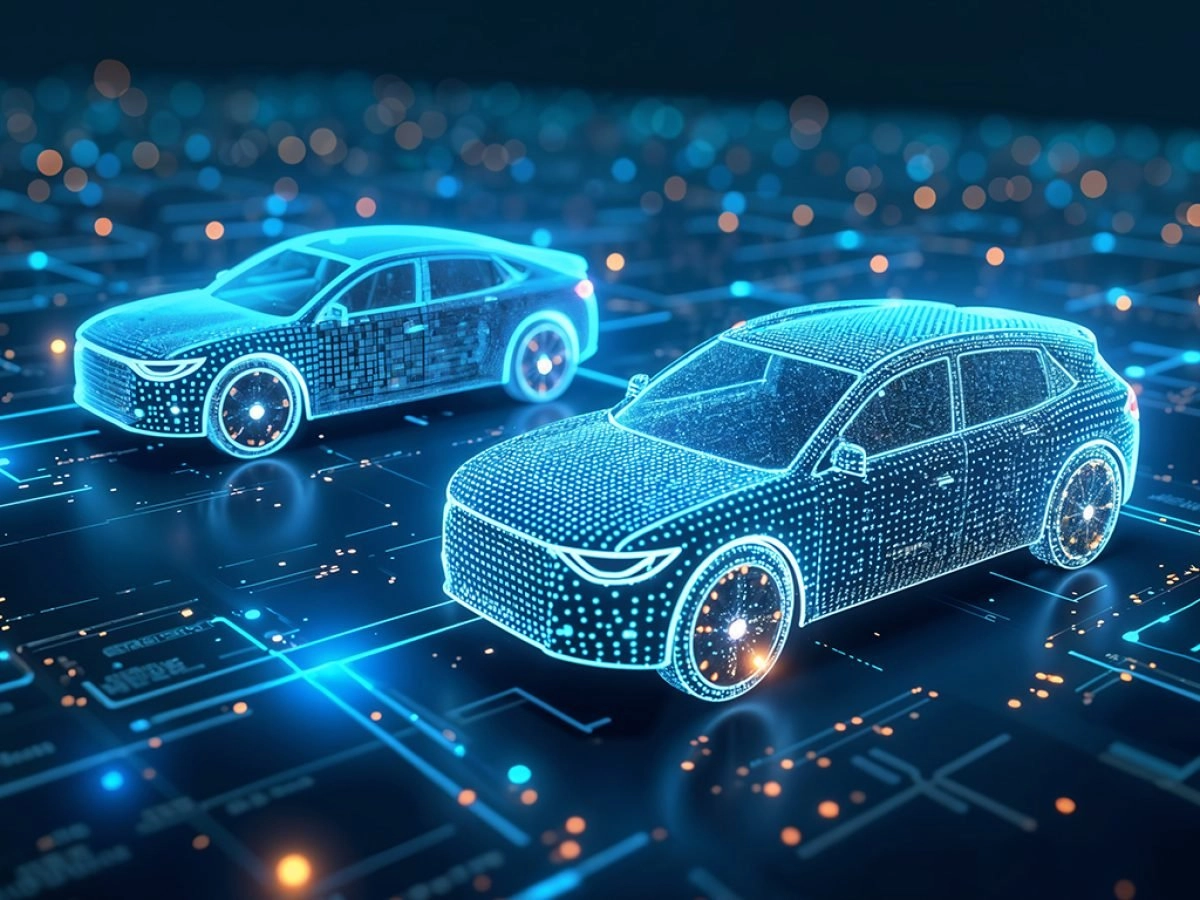
Connected vehicles are no longer a futuristic concept—they’re already here, dominating dealership lots and highways across the United States. These are vehicles equipped with internet connectivity, smart infotainment systems, advanced driver assistance features, and integration with smartphones and cloud-based services. They bring enormous benefits: real-time navigation, streaming media, remote diagnostics, predictive maintenance, and even semi-autonomous driving capabilities.
However, every leap in connectivity brings a shadow: the risk of cyberattacks. Cybersecurity in connected vehicles has become one of the fastest-growing concerns in both the automotive and technology industries. A single vulnerability could allow a hacker to access personal data, disrupt critical driving functions, or compromise safety systems. In a world where our cars are essentially rolling computers, protecting them from cyber threats is as important as protecting them from physical theft.
This article explores the core issues around connected vehicle cybersecurity, how automakers are responding, what U.S. regulations mean for consumers, and the steps drivers can take to safeguard their digital mobility.
Why Cybersecurity Matters for Connected Vehicles
In the U.S., connected vehicles are quickly becoming the default. Industry data suggests that by 2025, over 80% of new vehicles will have built-in connected features. These may include vehicle-to-vehicle (V2V) communication, vehicle-to-infrastructure (V2I) connectivity, over-the-air (OTA) updates, advanced infotainment systems, and integration with personal devices.
The benefits are clear. Cars can receive updates without visiting a dealership, drivers can remotely start their engines or pre-cool the cabin before stepping outside, and fleets can manage hundreds of vehicles more efficiently. But with these capabilities come new vulnerabilities.
Researchers and security experts have already demonstrated ways to remotely control vehicles through unsecured systems—unlocking doors, starting engines, or even interfering with steering and braking. In 2022, a demonstration showed how hackers could access multiple makes and models simply by exploiting flaws in connected apps. The message was clear: if a car can talk to the internet, someone can try to talk back in ways you might not expect.
The Main Cyber Threats Facing Modern Vehicles
Remote Hacking
Remote hacking involves taking control of a vehicle’s functions without physical access. This can happen if the infotainment system, telematics unit, or connected mobile app has vulnerabilities. In extreme cases, remote hackers could manipulate steering, brakes, or acceleration.
Data Theft
Modern vehicles store a lot more than engine diagnostics. They may contain addresses from your navigation system, contact lists from your phone, and even payment details if you use in-car purchasing features. Cybercriminals target this information for identity theft or resale.
Ransomware Attacks
Imagine being locked out of your own vehicle until you pay a ransom. While still rare in cars, ransomware is a growing concern as more vehicle systems become software-dependent.
OTA Update Exploits
Over-the-air updates are a huge convenience, but if they aren’t encrypted and verified, they can be a pathway for malware. Attackers could insert malicious code during the update process.
Sensor Manipulation
Autonomous and semi-autonomous vehicles rely on sensors like LiDAR, radar, and cameras. If attackers feed false data to these sensors, they could disrupt navigation, emergency braking, or collision avoidance systems.
How Automakers and Tech Companies Are Responding
The auto industry is investing heavily in cybersecurity, with many manufacturers hiring dedicated teams and partnering with leading technology companies.
Ford, GM, Toyota, Tesla, BMW, and Mercedes-Benz are developing proprietary systems to detect and block suspicious activity. Many are adopting zero trust architectures, where every digital interaction is verified before access is granted.
Other initiatives include:
- Encrypted OTA Updates to ensure that only verified, authentic software is installed.
- Vehicle Intrusion Detection Systems (VIDS) that work like firewalls, monitoring in-car networks for unusual activity.
- Bug Bounty Programs that reward ethical hackers for finding and reporting security flaws before criminals exploit them.
- Collaboration with Cloud Providers like Google Cloud, AWS, and Microsoft Azure for secure automotive data storage and analysis.
The Regulatory Landscape in the U.S.
Government agencies are stepping in to ensure that connected vehicles meet cybersecurity standards. The National Highway Traffic Safety Administration (NHTSA) has issued guidelines encouraging manufacturers to implement layered cybersecurity protections. The Federal Trade Commission (FTC) focuses on consumer data protection, requiring companies to be transparent about how vehicle data is collected and used.
In addition to national guidance, several standards and frameworks are shaping the industry:
- ISO/SAE 21434: Global standard for managing automotive cybersecurity risks across the vehicle lifecycle.
- UN Regulation No. 155: Focuses on cybersecurity management for vehicle manufacturers.
- State-Level Data Privacy Laws: California’s CCPA and similar laws in other states require stricter control over personal vehicle data.
Best Practices for Drivers
While much of the responsibility lies with automakers, drivers can take steps to reduce risks:
- Always update your vehicle’s software when prompted.
- Use strong, unique passwords for connected apps.
- Review and limit app permissions.
- Avoid connecting to unsecured Wi-Fi networks in your vehicle.
- Disable connectivity features you don’t use.
Comparison: Traditional vs. Connected Vehicle Security Risks
| Feature | Traditional Vehicles | Connected Vehicles |
|---|---|---|
| Data Privacy Concerns | Minimal | High |
| Remote Hacking Risk | None | High |
| Update Method | Manual | Over-the-Air |
| Theft Prevention | Physical locks | Digital + Physical |
| Regulatory Oversight | Standard safety laws | Cyber + safety compliance |
The Future of Cybersecurity in Connected Vehicles
By 2030, cybersecurity will be one of the most important selling points in the auto industry. Manufacturers will market not just horsepower and fuel economy, but also encrypted communication, AI-driven threat detection, and secure identity verification.
Emerging technologies like quantum encryption, blockchain for vehicle identities, and AI-powered intrusion prevention systems will become common. Instead of reacting to attacks, vehicles will detect and neutralize them in real time.
Cybersecurity in connected vehicles is not a passing trend—it’s the foundation of trust for the next generation of mobility. Consumers will increasingly expect manufacturers to be transparent about their security measures, just as they expect safety ratings today.
Conclusion
The shift to connected mobility offers exciting possibilities, from smarter navigation to self-driving technology. But it also demands a commitment to cybersecurity at every level—manufacturer, regulator, and driver. Protecting connected vehicles from cyber threats isn’t just about preventing inconvenience; it’s about preserving safety, privacy, and public trust in the future of transportation.
Reviews and Searches
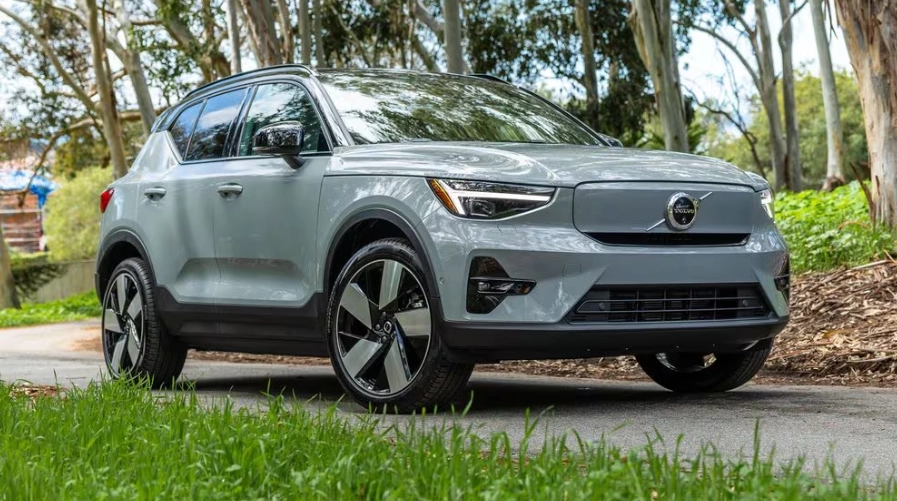
Rethinking Range: The 2024 Volvo XC40 Recharge Single Motor Prioritizes Efficiency
'%3e%3cg%20id='编组-7'%20transform='translate(400.000000,%201040.000000)'%3e%3cg%20id='编组-8'%20transform='translate(0.000000,%2073.000000)'%3e%3cg%20id='跳转'%20transform='translate(311.000000,%20190.000000)'%3e%3crect%20id='矩形'%20x='0'%20y='0'%20width='24'%20height='24'%3e%3c/rect%3e%3cpath%20d='M13.9093355,5.18802983%20L19.3305921,10.9804854%20C19.5534767,11.2186311%2019.5567855,11.5706654%2019.3384107,11.812343%20L13.917154,17.8121039%20C13.6707745,18.0847747%2013.0633128,18.0394673%2012.7678363,17.8121039%20C12.4723599,17.5847405%2012.4053957,16.9857799%2012.6517753,16.713109%20L16.715,12.3%20L4.9,12.3%20C4.40294373,12.3%204,11.8970563%204,11.4%20C4,10.9029437%204.40294373,10.5%204.9,10.5%20L16.675,10.5%20L12.6517753,6.26480361%20C12.4003075,5.99611759%2012.476678,5.42008869%2012.7678363,5.18802983%20C13.0589947,4.95597097%2013.6578677,4.91934381%2013.9093355,5.18802983%20Z'%20id='形状结合'%20fill='%23FFFFFF'%20fill-rule='nonzero'%3e%3c/path%3e%3c/g%3e%3c/g%3e%3c/g%3e%3c/g%3e%3c/g%3e%3c/svg%3e)
Cybersecurity in Connected Vehicles
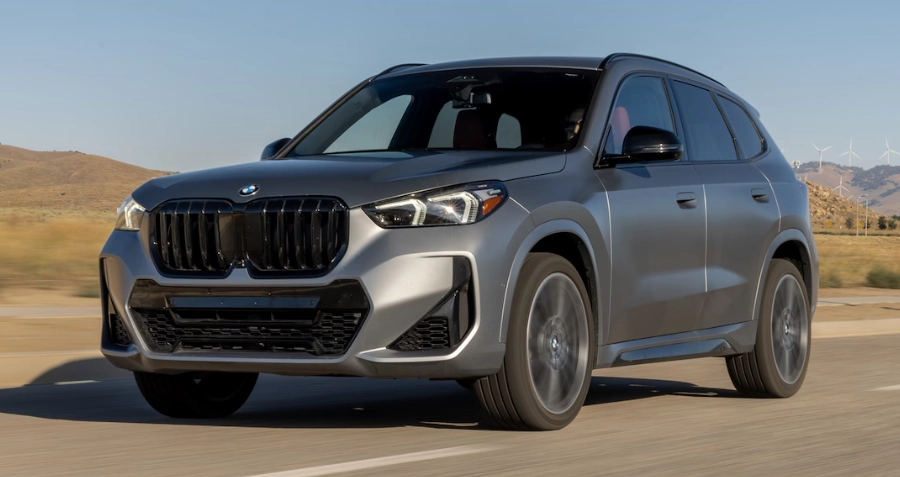
The 2024 BMW X1: A Sporty Update for the Entry-Level Luxury SUV
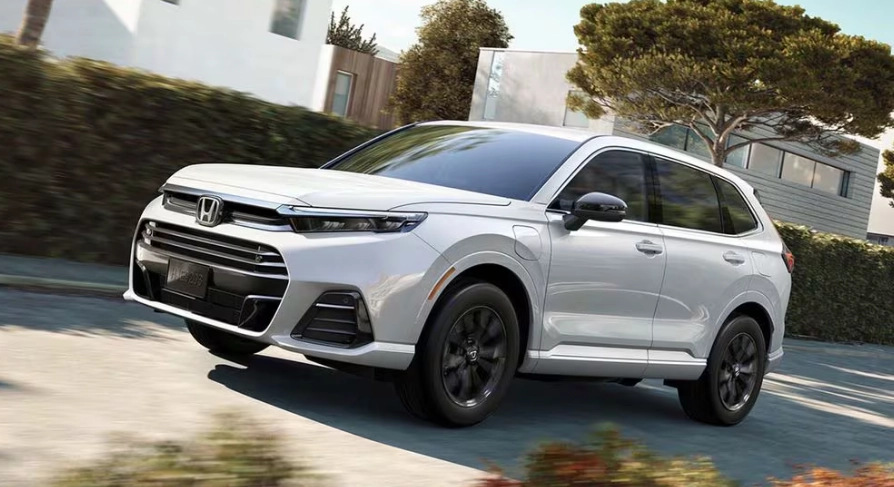
Honda CR-V e: The Future is Now, Powered by Hydrogen
Related Articles
Cybersecurity in Connected Vehicles
The Ultimate Guide to Selling Your Car in the U.S. – Get the Best Deal
Affordable Car Rentals Near You: Compare and Book Today
Guide to Comparing Car Insurance Quotes in the USA
Finding the Best Car Accident Lawyer in the USA
Guide to Buying Luxury SUVs in the USA: Compact to Midsize