
'%20fill='%23999999'%20fill-rule='nonzero'%3e%3cpath%20d='M89,17%20C89.571637,17%2090.0350404,17.4634034%2090.0350404,18.0350404%20L90.035,23.964%20L95.9649596,23.9649596%20C96.5365966,23.9649596%2097,24.428363%2097,25%20C97,25.571637%2096.5365966,26.0350404%2095.9649596,26.0350404%20L90.035,26.035%20L90.0350404,31.9649596%20C90.0350404,32.5365966%2089.571637,33%2089,33%20C88.428363,33%2087.9649596,32.5365966%2087.9649596,31.9649596%20L87.964,26.035%20L82.0350404,26.0350404%20C81.4634034,26.0350404%2081,25.571637%2081,25%20C81,24.428363%2081.4634034,23.9649596%2082.0350404,23.9649596%20L87.964,23.964%20L87.9649596,18.0350404%20C87.9649596,17.4634034%2088.428363,17%2089,17%20Z'%20id='形状结合'%20transform='translate(89.000000,%2025.000000)%20rotate(-315.000000)%20translate(-89.000000,%20-25.000000)%20'%3e%3c/path%3e%3c/g%3e%3c/g%3e%3c/svg%3e)
'%3e%3cg%20id='编组-6'%20transform='translate(1373.000000,%2025.000000)'%3e%3cg%20id='下拉备份-3'%20transform='translate(123.000000,%200.000000)'%3e%3crect%20id='矩形'%20x='0'%20y='0'%20width='24'%20height='24'%3e%3c/rect%3e%3cpath%20d='M17.6089435,8.9653235%20C17.896574,8.70700919%2018.5132174,8.78545894%2018.7616382,9.08454445%20C19.010059,9.38362996%2019.0492687,9.99880806%2018.7616382,10.2571224%20L12.5607696,15.8259798%20C12.3058327,16.0549327%2011.9289773,16.0583315%2011.6702596,15.8340113%20L5.24746896,10.2651538%20C4.95557272,10.0120663%205.00407468,9.38806562%205.24746896,9.08454445%20C5.49086324,8.78102329%206.13205521,8.71223591%206.42395145,8.9653235%20L12.102706,13.9843741%20L17.6089435,8.9653235%20Z'%20id='路径-2'%20fill='%23475288'%20fill-rule='nonzero'%3e%3c/path%3e%3c/g%3e%3c/g%3e%3c/g%3e%3c/g%3e%3c/svg%3e)
'%3e%3cg%20id='编组'%20transform='translate(0.000000,%2074.000000)'%3e%3cg%20id='编组-2'%20transform='translate(725.000000,%2030.000000)'%3e%3cg%20id='下拉备份'%20transform='translate(243.000000,%208.000000)'%3e%3crect%20id='矩形'%20fill='%23F4F4F4'%20x='0'%20y='0'%20width='24'%20height='24'%20rx='4'%3e%3c/rect%3e%3cpath%20d='M17.6089435,8.9653235%20C17.896574,8.70700919%2018.5132174,8.78545894%2018.7616382,9.08454445%20C19.010059,9.38362996%2019.0492687,9.99880806%2018.7616382,10.2571224%20L12.5607696,15.8259798%20C12.3058327,16.0549327%2011.9289773,16.0583315%2011.6702596,15.8340113%20L5.24746896,10.2651538%20C4.95557272,10.0120663%205.00407468,9.38806562%205.24746896,9.08454445%20C5.49086324,8.78102329%206.13205521,8.71223591%206.42395145,8.9653235%20L12.102706,13.9843741%20L17.6089435,8.9653235%20Z'%20id='路径-2'%20fill='%23475288'%20fill-rule='nonzero'%3e%3c/path%3e%3c/g%3e%3c/g%3e%3c/g%3e%3c/g%3e%3c/g%3e%3c/svg%3e)
'%20filter='url(%23filter-1)'%3e%3cg%20id='编组-2'%20transform='translate(337.000000,%2013.000000)'%3e%3crect%20id='矩形'%20x='0'%20y='0'%20width='28'%20height='28'%3e%3c/rect%3e%3cg%20id='编组'%20transform='translate(5.250000,%207.000000)'%20stroke='%23475288'%20stroke-linecap='round'%20stroke-width='1.75'%3e%3cpath%20d='M0,0.4375%20L17.5,0.4375%20M0,7.4375%20L17.5,7.4375%20M0,14.4375%20L17.5,14.4375'%20id='形状结合'%3e%3c/path%3e%3c/g%3e%3c/g%3e%3c/g%3e%3c/g%3e%3c/svg%3e)
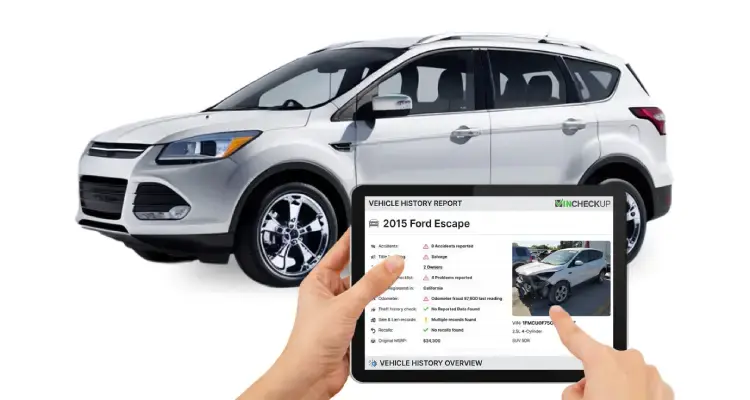
Buying a used car can be exciting, but it also comes with risks. Even a well-maintained car can hide costly surprises if you don’t know its full history. Vehicle history reports are one of the most effective tools to reduce these risks and make an informed purchase.
By reviewing a report before you buy, you can uncover past accidents, title issues, flood or fire damage, odometer discrepancies, and other problems that might affect safety, reliability, or resale value. Understanding these details helps you avoid expensive mistakes and negotiate confidently.
What is a VIN Code and How to Check a Vehicle's History Using It
The Vehicle Identification Number, or VIN, is a unique 17-character code assigned to every car. It acts like a fingerprint for your vehicle, providing key details about make, model, engine type, manufacturing year, and place of manufacture. A VIN is essential for checking a vehicle history report.
To use a VIN, you can usually find it on the dashboard near the windshield, inside the driver-side door frame, or on registration and title documents. Enter this VIN into a trusted report service, and you’ll receive detailed information about the car’s past. Always double-check the VIN on the vehicle itself against the documentation to ensure consistency, as mismatched VINs are a major red flag.
Using the VIN is simple, but it’s critical to ensure you are reviewing the correct vehicle. For example, two identical models may look the same, but their histories can be entirely different. A quick VIN check can save thousands of dollars in future repairs or legal issues.
Comparison of Report Services: Carfax vs AutoCheck
There are several services available to generate vehicle history reports, with Carfax and AutoCheck being the most widely used. Both services compile data from insurance companies, DMVs, service shops, and other sources, but they differ slightly in coverage and emphasis.
Carfax often provides more detailed maintenance records and accident history, while AutoCheck tends to focus on title issues, including salvage or branded titles, and gives a score for accident history compared to similar vehicles. Depending on your priorities, you may choose one or even purchase reports from both providers for the same car to get a fuller picture.
For example, if you are particularly concerned about flood or fire damage, check both reports and compare. Cross-referencing can reveal discrepancies or gaps in data, which is valuable information before making a purchase.
How to Interpret Key Information on a Vehicle History Report
A history report can seem overwhelming at first, but focusing on the most important sections will save you time and stress. Key areas to review include accident history, title type, odometer readings, service and maintenance records, and any reported damage.
Accident reports will indicate the severity and date of accidents, while the title section will tell you if the car has a clean, salvage, or rebuilt title. Odometer readings help identify rollback fraud, and service records give insight into how well the car was maintained. Knowing what to prioritize helps you focus on potential issues that might affect safety or resale value.
For instance, if the report shows multiple minor accidents but the car has consistent maintenance records and no structural damage, it may still be a good buy. Conversely, a single major accident with frame damage is a serious concern.
How to Identify Accident Vehicles, Flood-Damaged Vehicles, and Fire-Damaged Vehicles
Vehicle history reports can flag cars that have been in serious accidents or suffered flood or fire damage. Flood-damaged cars may have water entry alerts, salvage titles, or insurance claims that mention water damage. Fire-damaged vehicles can appear with insurance claims specifying fire, collision, or comprehensive coverage events.
Even if the damage seems minor or cosmetic repairs were done, underlying electrical issues, corrosion, and safety hazards can persist for years. For example, flood damage can cause wiring failures, hidden rust, or malfunctioning airbags, which may not be immediately visible but can create long-term problems.
Reports may not catch every single issue, so a visual inspection combined with a professional mechanic check is still recommended. If a report shows fire or flood claims, treat the car as high-risk and consider walking away unless you have a trusted expert inspect it thoroughly.
Related Articles: The "Red Flag" Pre-purchase Checklist, How to Spot Flood-Damaged and Salvage Title Cars?, Vehicle Title Issues: Understanding Clean vs Salvage Titles
What Should You Do if the Report Shows Problems?
If a vehicle history report highlights issues, don’t panic—use it as a negotiation tool or a guide to walk away. Start by assessing the severity and impact of the problems. Minor cosmetic accidents with proper repair history may not be deal-breakers, while structural damage, odometer tampering, or flood/fire damage usually are.
Always cross-check reported problems with a physical inspection and a pre-purchase mechanic evaluation. For example, if a report shows a minor accident, a mechanic can verify that the frame is intact and no hidden damage exists. For severe issues, consider either renegotiating the price to account for repair costs or choosing another vehicle altogether.
Negotiating using the report as evidence is often effective. A seller who sees that you have detailed information may be more willing to lower the price or provide additional assurances. At the same time, knowing when to walk away protects you from a car that will cost far more in repairs than it’s worth.
Related Article: Common Used Car Problems by Age & Mileage: What to Expect?
Conclusion
Checking a vehicle’s history report is an essential step in buying a used car. It provides critical insights into the car’s past, reveals hidden risks, and equips you with leverage for negotiation. Combined with a professional inspection and careful evaluation, a history report can save you money, stress, and potential safety hazards.
By understanding how to read and interpret these reports, buyers make smarter, more informed decisions and significantly reduce the chances of unpleasant surprises after purchase. Always use the report as part of a broader due diligence process—it’s one of your best tools for ensuring a safe and reliable used car purchase.