'%20fill='%23999999'%20fill-rule='nonzero'%3e%3cpath%20d='M89,17%20C89.571637,17%2090.0350404,17.4634034%2090.0350404,18.0350404%20L90.035,23.964%20L95.9649596,23.9649596%20C96.5365966,23.9649596%2097,24.428363%2097,25%20C97,25.571637%2096.5365966,26.0350404%2095.9649596,26.0350404%20L90.035,26.035%20L90.0350404,31.9649596%20C90.0350404,32.5365966%2089.571637,33%2089,33%20C88.428363,33%2087.9649596,32.5365966%2087.9649596,31.9649596%20L87.964,26.035%20L82.0350404,26.0350404%20C81.4634034,26.0350404%2081,25.571637%2081,25%20C81,24.428363%2081.4634034,23.9649596%2082.0350404,23.9649596%20L87.964,23.964%20L87.9649596,18.0350404%20C87.9649596,17.4634034%2088.428363,17%2089,17%20Z'%20id='形状结合'%20transform='translate(89.000000,%2025.000000)%20rotate(-315.000000)%20translate(-89.000000,%20-25.000000)%20'%3e%3c/path%3e%3c/g%3e%3c/g%3e%3c/svg%3e)
'%3e%3cg%20id='编组-6'%20transform='translate(1373.000000,%2025.000000)'%3e%3cg%20id='下拉备份-3'%20transform='translate(123.000000,%200.000000)'%3e%3crect%20id='矩形'%20x='0'%20y='0'%20width='24'%20height='24'%3e%3c/rect%3e%3cpath%20d='M17.6089435,8.9653235%20C17.896574,8.70700919%2018.5132174,8.78545894%2018.7616382,9.08454445%20C19.010059,9.38362996%2019.0492687,9.99880806%2018.7616382,10.2571224%20L12.5607696,15.8259798%20C12.3058327,16.0549327%2011.9289773,16.0583315%2011.6702596,15.8340113%20L5.24746896,10.2651538%20C4.95557272,10.0120663%205.00407468,9.38806562%205.24746896,9.08454445%20C5.49086324,8.78102329%206.13205521,8.71223591%206.42395145,8.9653235%20L12.102706,13.9843741%20L17.6089435,8.9653235%20Z'%20id='路径-2'%20fill='%23475288'%20fill-rule='nonzero'%3e%3c/path%3e%3c/g%3e%3c/g%3e%3c/g%3e%3c/g%3e%3c/svg%3e)
'%3e%3cg%20id='编组'%20transform='translate(0.000000,%2074.000000)'%3e%3cg%20id='编组-2'%20transform='translate(725.000000,%2030.000000)'%3e%3cg%20id='下拉备份'%20transform='translate(243.000000,%208.000000)'%3e%3crect%20id='矩形'%20fill='%23F4F4F4'%20x='0'%20y='0'%20width='24'%20height='24'%20rx='4'%3e%3c/rect%3e%3cpath%20d='M17.6089435,8.9653235%20C17.896574,8.70700919%2018.5132174,8.78545894%2018.7616382,9.08454445%20C19.010059,9.38362996%2019.0492687,9.99880806%2018.7616382,10.2571224%20L12.5607696,15.8259798%20C12.3058327,16.0549327%2011.9289773,16.0583315%2011.6702596,15.8340113%20L5.24746896,10.2651538%20C4.95557272,10.0120663%205.00407468,9.38806562%205.24746896,9.08454445%20C5.49086324,8.78102329%206.13205521,8.71223591%206.42395145,8.9653235%20L12.102706,13.9843741%20L17.6089435,8.9653235%20Z'%20id='路径-2'%20fill='%23475288'%20fill-rule='nonzero'%3e%3c/path%3e%3c/g%3e%3c/g%3e%3c/g%3e%3c/g%3e%3c/g%3e%3c/svg%3e)
'%20filter='url(%23filter-1)'%3e%3cg%20id='编组-2'%20transform='translate(337.000000,%2013.000000)'%3e%3crect%20id='矩形'%20x='0'%20y='0'%20width='28'%20height='28'%3e%3c/rect%3e%3cg%20id='编组'%20transform='translate(5.250000,%207.000000)'%20stroke='%23475288'%20stroke-linecap='round'%20stroke-width='1.75'%3e%3cpath%20d='M0,0.4375%20L17.5,0.4375%20M0,7.4375%20L17.5,7.4375%20M0,14.4375%20L17.5,14.4375'%20id='形状结合'%3e%3c/path%3e%3c/g%3e%3c/g%3e%3c/g%3e%3c/g%3e%3c/svg%3e)
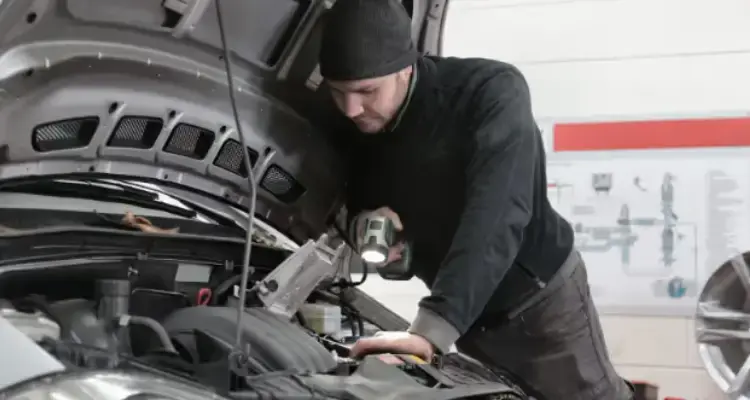
When buying a used car, some problems are more than minor inconveniences—they are warning signs that should make you pause or walk away entirely. These “red flags” often indicate serious mechanical issues, hidden accident damage, legal complications, or even potential fraud.
This pre-purchase checklist focuses on the most critical warning signs buyers should never ignore. Understanding these red flags before you buy can save you from costly repairs, legal headaches, and long-term regret.
How to Use This Red Flag Checklist
Not every issue uncovered during an inspection is a deal-breaker. Normal wear and tear is expected on used vehicles. Red flags, however, suggest deeper problems that may affect safety, reliability, or ownership rights.
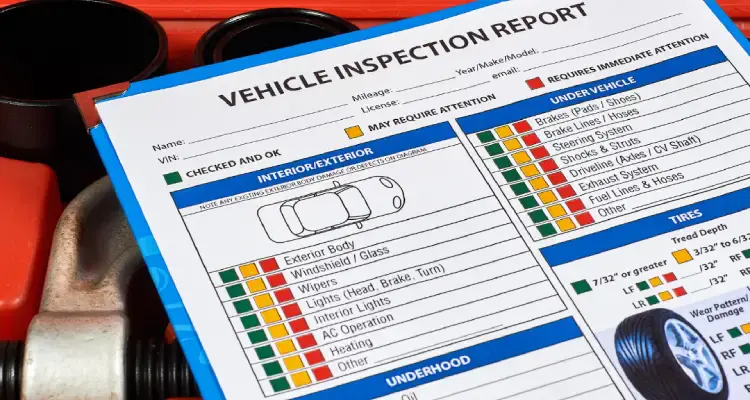
Use this checklist alongside a physical inspection, test drive, and vehicle history report. If multiple red flags appear, it is usually a sign that the car is not worth the risk—no matter how attractive the price may seem.
Related Article: How to Thoroughly Inspect a Used Car Before Buying It?
Structural and Accident Damage Red Flags
Structural damage is one of the most serious red flags when buying a used car. Vehicles that have been involved in major accidents may look repaired on the surface but still suffer from compromised frame integrity.
These issues can affect handling, crash safety, and long-term durability—often in ways that are expensive or impossible to fully fix.
- Uneven panel gaps or doors that do not close properly
- Visible frame damage or weld marks under the car
- Mismatched paint colors or inconsistent body lines
- Airbags that appear to have been replaced or tampered with
If you suspect structural damage, a professional inspection is essential. In many cases, walking away is the safest decision.
Engine and Transmission Issues You Should Not Ignore
The engine and transmission are the most expensive components to repair or replace. Red flags in these areas often indicate poor maintenance, excessive wear, or hidden mechanical failures.
Problems may not always trigger warning lights, so paying attention to sounds, vibrations, and performance during a test drive is critical.
- Knocking, ticking, or grinding noises from the engine
- Delayed or rough gear shifts
- Transmission slipping or hesitation
- Oil leaks or burnt-smelling fluids
Even minor symptoms can point to major repairs down the road. If the seller downplays these issues, treat that as an additional red flag.
Related Article: Common Used Car Problems by Age & Mileage: What to Expect?
Rust, Corrosion, and Water Damage Warning Signs
Rust and water damage can significantly shorten a vehicle’s lifespan and compromise safety systems. While surface rust may be cosmetic, structural corrosion or flood damage is a serious concern.
Flood-damaged vehicles are especially risky, as electrical problems and corrosion may appear months or even years after purchase.
- Excessive rust on the frame, suspension, or underbody
- Musty odors or damp carpets inside the cabin
- Corrosion on electrical connectors or fuse boxes
- Foggy headlights or moisture inside gauges
Water damage is often difficult to fully repair and may not be covered by warranties.
Related Article: How to Spot Flood-Damaged and Salvage Title Cars?
Title and Ownership Red Flags
Even if a car is mechanically sound, ownership and title issues can turn it into a legal nightmare. Problems with paperwork may prevent you from registering or reselling the vehicle.
Always verify that the seller has clear legal ownership and that the title matches the vehicle.
- Salvage, rebuilt, or branded titles without proper disclosure
- VIN numbers that do not match title documents
- Outstanding liens on the vehicle
- Seller unwilling to provide title details
Title problems should never be ignored, regardless of how good the deal appears.
Related Articles: Why is it Necessary to Check a Vehicle's History Report?, Legal Tips: Title Transfer & State Laws
Odometer and Seller Behavior Red Flags
Odometer fraud and dishonest seller behavior are more common than many buyers expect. Inconsistencies in mileage or evasive answers can signal deeper problems.
Pay close attention not only to the car itself, but also to how the seller communicates and responds to reasonable questions.
- Mileage that does not align with the car’s condition
- Service records that are missing or incomplete
- Seller rushing the sale or discouraging inspections
- Reluctance to allow a test drive or independent mechanic
A trustworthy seller should be transparent and willing to provide documentation. Defensive or evasive behavior is often a sign to walk away.
Conclusion
The goal of a red flag checklist is not to scare buyers, but to protect them. Used cars can be great investments when chosen carefully, but ignoring warning signs often leads to expensive consequences.
By recognizing red flags related to structural damage, mechanical issues, water exposure, title problems, and seller behavior, you significantly reduce your risk.
If something feels wrong, trust your instincts. In the used car market, walking away from a bad deal is often the smartest decision you can make.