'%20fill='%23999999'%20fill-rule='nonzero'%3e%3cpath%20d='M89,17%20C89.571637,17%2090.0350404,17.4634034%2090.0350404,18.0350404%20L90.035,23.964%20L95.9649596,23.9649596%20C96.5365966,23.9649596%2097,24.428363%2097,25%20C97,25.571637%2096.5365966,26.0350404%2095.9649596,26.0350404%20L90.035,26.035%20L90.0350404,31.9649596%20C90.0350404,32.5365966%2089.571637,33%2089,33%20C88.428363,33%2087.9649596,32.5365966%2087.9649596,31.9649596%20L87.964,26.035%20L82.0350404,26.0350404%20C81.4634034,26.0350404%2081,25.571637%2081,25%20C81,24.428363%2081.4634034,23.9649596%2082.0350404,23.9649596%20L87.964,23.964%20L87.9649596,18.0350404%20C87.9649596,17.4634034%2088.428363,17%2089,17%20Z'%20id='形状结合'%20transform='translate(89.000000,%2025.000000)%20rotate(-315.000000)%20translate(-89.000000,%20-25.000000)%20'%3e%3c/path%3e%3c/g%3e%3c/g%3e%3c/svg%3e)
'%3e%3cg%20id='编组-6'%20transform='translate(1373.000000,%2025.000000)'%3e%3cg%20id='下拉备份-3'%20transform='translate(123.000000,%200.000000)'%3e%3crect%20id='矩形'%20x='0'%20y='0'%20width='24'%20height='24'%3e%3c/rect%3e%3cpath%20d='M17.6089435,8.9653235%20C17.896574,8.70700919%2018.5132174,8.78545894%2018.7616382,9.08454445%20C19.010059,9.38362996%2019.0492687,9.99880806%2018.7616382,10.2571224%20L12.5607696,15.8259798%20C12.3058327,16.0549327%2011.9289773,16.0583315%2011.6702596,15.8340113%20L5.24746896,10.2651538%20C4.95557272,10.0120663%205.00407468,9.38806562%205.24746896,9.08454445%20C5.49086324,8.78102329%206.13205521,8.71223591%206.42395145,8.9653235%20L12.102706,13.9843741%20L17.6089435,8.9653235%20Z'%20id='路径-2'%20fill='%23475288'%20fill-rule='nonzero'%3e%3c/path%3e%3c/g%3e%3c/g%3e%3c/g%3e%3c/g%3e%3c/svg%3e)
'%3e%3cg%20id='编组'%20transform='translate(0.000000,%2074.000000)'%3e%3cg%20id='编组-2'%20transform='translate(725.000000,%2030.000000)'%3e%3cg%20id='下拉备份'%20transform='translate(243.000000,%208.000000)'%3e%3crect%20id='矩形'%20fill='%23F4F4F4'%20x='0'%20y='0'%20width='24'%20height='24'%20rx='4'%3e%3c/rect%3e%3cpath%20d='M17.6089435,8.9653235%20C17.896574,8.70700919%2018.5132174,8.78545894%2018.7616382,9.08454445%20C19.010059,9.38362996%2019.0492687,9.99880806%2018.7616382,10.2571224%20L12.5607696,15.8259798%20C12.3058327,16.0549327%2011.9289773,16.0583315%2011.6702596,15.8340113%20L5.24746896,10.2651538%20C4.95557272,10.0120663%205.00407468,9.38806562%205.24746896,9.08454445%20C5.49086324,8.78102329%206.13205521,8.71223591%206.42395145,8.9653235%20L12.102706,13.9843741%20L17.6089435,8.9653235%20Z'%20id='路径-2'%20fill='%23475288'%20fill-rule='nonzero'%3e%3c/path%3e%3c/g%3e%3c/g%3e%3c/g%3e%3c/g%3e%3c/g%3e%3c/svg%3e)
'%20filter='url(%23filter-1)'%3e%3cg%20id='编组-2'%20transform='translate(337.000000,%2013.000000)'%3e%3crect%20id='矩形'%20x='0'%20y='0'%20width='28'%20height='28'%3e%3c/rect%3e%3cg%20id='编组'%20transform='translate(5.250000,%207.000000)'%20stroke='%23475288'%20stroke-linecap='round'%20stroke-width='1.75'%3e%3cpath%20d='M0,0.4375%20L17.5,0.4375%20M0,7.4375%20L17.5,7.4375%20M0,14.4375%20L17.5,14.4375'%20id='形状结合'%3e%3c/path%3e%3c/g%3e%3c/g%3e%3c/g%3e%3c/g%3e%3c/svg%3e)
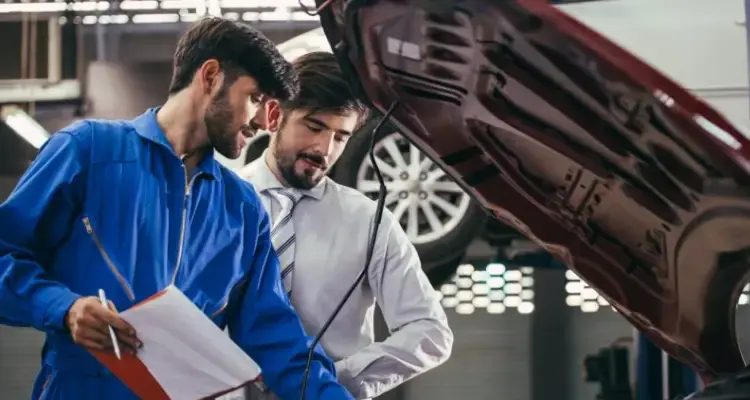
A thorough inspection is one of the most important steps when buying a used car. While a vehicle may look good on the surface, hidden mechanical issues, accident damage, or poor maintenance history can turn a seemingly good deal into a costly mistake. This guide walks you through a complete used car inspection process, from a practical checklist to understanding inspection reports and spotting red flags before you buy.
Vehicle Inspection Checklist: What to Examine First
Before negotiating price or committing to a test drive, it’s smart to start with a systematic inspection. Using a checklist helps ensure you don’t overlook critical areas, especially when emotions or time pressure are involved.
Exterior Inspection
- Look for dents, scratches, rust, or mismatched paint
- Check panel gaps for uneven alignment
- Inspect the windshield and windows for cracks or chips
- Examine tire condition and look for uneven wear
Interior Inspection
- Test seat adjustments, seatbelts, and upholstery condition
- Check dashboard warning lights when the car starts
- Test air conditioning, heating, and infotainment systems
- Pay attention to unusual smells, such as mold or burning odors
Related Article: The "Red Flag" Pre-purchase Checklist
15 Key Areas to Check Before Buying a Used Car
A proper inspection should go beyond a quick walk-around. These 15 areas cover the most common sources of expensive repairs and safety concerns.
- Engine condition and visible oil leaks
- Transmission shifting and responsiveness
- Brake performance and brake pad wear
- Suspension and steering stability
- Tire tread depth and alignment
- Battery age and corrosion
- Cooling system and radiator condition
- Exhaust system and emissions components
- Frame integrity and underbody rust
- Electrical systems and wiring
- Airbags and safety features
- Dashboard warning lights
- Fluid levels and fluid condition
- VIN consistency across the vehicle
- Signs of previous accidents or major repairs
Common Problems and Solutions When Buying a Used Car
Used cars often develop predictable problems based on age, mileage, and maintenance history. Understanding these issues in advance helps you estimate repair costs and decide whether a car is worth pursuing.
| Common Problem | Typical Cause | Possible Solution |
|---|---|---|
| Oil leaks | Worn gaskets or seals | Repair or negotiate a lower price |
| Transmission slipping | Poor maintenance or high mileage | Professional inspection or avoid purchase |
| Uneven tire wear | Alignment or suspension issues | Wheel alignment or suspension repair |
| Electrical failures | Corrosion or faulty wiring | Diagnostic testing before buying |
Related Article: Common Used Car Problems by Age & Mileage: What to Expect?
How to Understand a Vehicle Inspection Report
A professional vehicle inspection report can look overwhelming at first, especially if you are not familiar with automotive terminology. However, learning how to interpret the findings can save you from unexpected repair bills.
Most inspection reports categorize issues by severity. Pay close attention not only to major issues, but also to repeated moderate problems that could add up over time.
- Minor Issues: Cosmetic damage or normal wear that does not affect safety
- Moderate Issues: Repairs needed in the near future
- Major Issues: Safety risks or costly mechanical failures
How to Identify Hidden Mechanical Problems and Accident Damage
Some of the most expensive used car problems are not immediately visible. Sellers may address cosmetic flaws while leaving deeper mechanical or structural damage untouched, especially if the car was involved in an accident.
Hidden issues often show up through small inconsistencies rather than obvious damage. Knowing where to look helps you spot warning signs before they turn into major expenses.
- Fresh undercoating or unusually clean areas underneath the car
- Paint overspray on rubber seals or trim
- Unusual noises during acceleration, braking, or turning
- Steering wheel vibration or pulling to one side
- VIN numbers that do not match across body panels
If something does not feel right, trust your instincts. Hiring a trusted mechanic for a pre-purchase inspection can uncover problems that are easy to miss during a casual check.
Related Article: Why is it Necessary to Check a Vehicle's History Report?
How to Avoid Costly Mistakes When Inspecting a Used Car
Many buyers make mistakes not because they lack information, but because they feel rushed or pressured. Sellers may claim there are other interested buyers or that the deal is only available for a short time.
Slowing down and sticking to your inspection process gives you control. A careful inspection is not just about the car itself—it’s about making sure the deal makes sense for you.
- Always take a test drive on different types of roads
- Do not rely only on inspection reports provided by the seller
- Compare inspection results with the vehicle history report
- Walk away if an independent inspection is refused
Walking away from a questionable deal is often the smartest move. Another used car will always be available, but fixing a bad one can quickly become expensive.
Related Article: How to Avoid Common Used Car Buying Mistakes
Conclusion
Buying a used car does not have to feel risky. A thorough inspection helps you understand what you are really purchasing—not just how the car looks today, but how reliable it will be in the long run.
By following a structured inspection checklist, learning how to read inspection reports, and recognizing signs of hidden mechanical or accident-related issues, you place yourself in a much stronger position as a buyer.
Ultimately, the goal is simple: avoid unpleasant surprises, protect your budget, and drive away with confidence knowing you made an informed decision.