
'%20fill='%23999999'%20fill-rule='nonzero'%3e%3cpath%20d='M89,17%20C89.571637,17%2090.0350404,17.4634034%2090.0350404,18.0350404%20L90.035,23.964%20L95.9649596,23.9649596%20C96.5365966,23.9649596%2097,24.428363%2097,25%20C97,25.571637%2096.5365966,26.0350404%2095.9649596,26.0350404%20L90.035,26.035%20L90.0350404,31.9649596%20C90.0350404,32.5365966%2089.571637,33%2089,33%20C88.428363,33%2087.9649596,32.5365966%2087.9649596,31.9649596%20L87.964,26.035%20L82.0350404,26.0350404%20C81.4634034,26.0350404%2081,25.571637%2081,25%20C81,24.428363%2081.4634034,23.9649596%2082.0350404,23.9649596%20L87.964,23.964%20L87.9649596,18.0350404%20C87.9649596,17.4634034%2088.428363,17%2089,17%20Z'%20id='形状结合'%20transform='translate(89.000000,%2025.000000)%20rotate(-315.000000)%20translate(-89.000000,%20-25.000000)%20'%3e%3c/path%3e%3c/g%3e%3c/g%3e%3c/svg%3e)
'%3e%3cg%20id='编组-6'%20transform='translate(1373.000000,%2025.000000)'%3e%3cg%20id='下拉备份-3'%20transform='translate(123.000000,%200.000000)'%3e%3crect%20id='矩形'%20x='0'%20y='0'%20width='24'%20height='24'%3e%3c/rect%3e%3cpath%20d='M17.6089435,8.9653235%20C17.896574,8.70700919%2018.5132174,8.78545894%2018.7616382,9.08454445%20C19.010059,9.38362996%2019.0492687,9.99880806%2018.7616382,10.2571224%20L12.5607696,15.8259798%20C12.3058327,16.0549327%2011.9289773,16.0583315%2011.6702596,15.8340113%20L5.24746896,10.2651538%20C4.95557272,10.0120663%205.00407468,9.38806562%205.24746896,9.08454445%20C5.49086324,8.78102329%206.13205521,8.71223591%206.42395145,8.9653235%20L12.102706,13.9843741%20L17.6089435,8.9653235%20Z'%20id='路径-2'%20fill='%23475288'%20fill-rule='nonzero'%3e%3c/path%3e%3c/g%3e%3c/g%3e%3c/g%3e%3c/g%3e%3c/svg%3e)
'%3e%3cg%20id='编组'%20transform='translate(0.000000,%2074.000000)'%3e%3cg%20id='编组-2'%20transform='translate(725.000000,%2030.000000)'%3e%3cg%20id='下拉备份'%20transform='translate(243.000000,%208.000000)'%3e%3crect%20id='矩形'%20fill='%23F4F4F4'%20x='0'%20y='0'%20width='24'%20height='24'%20rx='4'%3e%3c/rect%3e%3cpath%20d='M17.6089435,8.9653235%20C17.896574,8.70700919%2018.5132174,8.78545894%2018.7616382,9.08454445%20C19.010059,9.38362996%2019.0492687,9.99880806%2018.7616382,10.2571224%20L12.5607696,15.8259798%20C12.3058327,16.0549327%2011.9289773,16.0583315%2011.6702596,15.8340113%20L5.24746896,10.2651538%20C4.95557272,10.0120663%205.00407468,9.38806562%205.24746896,9.08454445%20C5.49086324,8.78102329%206.13205521,8.71223591%206.42395145,8.9653235%20L12.102706,13.9843741%20L17.6089435,8.9653235%20Z'%20id='路径-2'%20fill='%23475288'%20fill-rule='nonzero'%3e%3c/path%3e%3c/g%3e%3c/g%3e%3c/g%3e%3c/g%3e%3c/g%3e%3c/svg%3e)
'%20filter='url(%23filter-1)'%3e%3cg%20id='编组-2'%20transform='translate(337.000000,%2013.000000)'%3e%3crect%20id='矩形'%20x='0'%20y='0'%20width='28'%20height='28'%3e%3c/rect%3e%3cg%20id='编组'%20transform='translate(5.250000,%207.000000)'%20stroke='%23475288'%20stroke-linecap='round'%20stroke-width='1.75'%3e%3cpath%20d='M0,0.4375%20L17.5,0.4375%20M0,7.4375%20L17.5,7.4375%20M0,14.4375%20L17.5,14.4375'%20id='形状结合'%3e%3c/path%3e%3c/g%3e%3c/g%3e%3c/g%3e%3c/g%3e%3c/svg%3e)
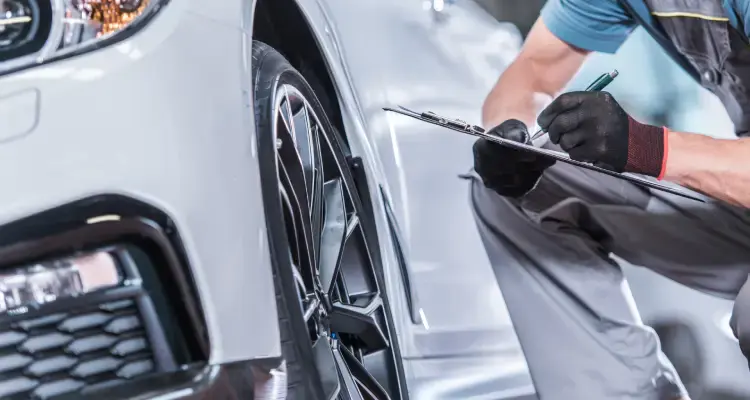
Even the most careful vehicle owners can make maintenance mistakes that negatively impact their car’s performance, safety, and longevity. Skipping or improperly performing basic upkeep can result in expensive repairs, decreased fuel efficiency, and reduced resale value. Understanding common maintenance errors and how to avoid them is key to keeping your vehicle running reliably for years.
In this guide, we’ll review frequent mistakes, explain why they’re harmful, and provide actionable tips to ensure you maintain your car correctly. By identifying and correcting these issues, you can protect your investment, enhance safety, and reduce long-term ownership costs.
Related Article:
A Complete Car Maintenance Checklist: Monthly, Quarterly & Annual
Skipping Regular Maintenance
One of the most common and damaging mistakes is skipping scheduled maintenance. Vehicle manufacturers provide maintenance schedules for a reason: regular oil changes, brake inspections, fluid checks, and tire rotations are critical to preventing component wear. Ignoring these intervals can lead to engine damage, brake failure, and transmission issues.
For example, delaying an oil change beyond the recommended mileage allows dirt and debris to circulate through the engine, accelerating wear on pistons and bearings. Similarly, not inspecting brakes regularly can result in worn pads and rotors, compromising your safety and requiring costly replacements. Keeping a consistent schedule—even for minor services—prevents small issues from snowballing into major repairs.
- Follow manufacturer-recommended service intervals
- Keep a detailed maintenance log to track completed work
- Schedule inspections even if your car seems “fine”
- Regular maintenance preserves vehicle value and reliability
Using Wrong Fluids
Fluids are the lifeblood of your vehicle, and using the wrong type can cause severe damage. Engine oil, transmission fluid, brake fluid, coolant, and power steering fluid each have precise specifications. Using incorrect fluids can lead to overheating, poor lubrication, and component failure. For instance, using a lower-grade oil than recommended reduces its protective properties, leading to increased friction and wear on engine parts.
Always consult your owner’s manual for the correct fluid types and specifications. Even if a fluid looks similar or fits in the reservoir, it may not provide the protection your vehicle needs. Additionally, ensure that fluids are topped off to the proper levels. Overfilling or underfilling can also lead to problems like foaming, leakage, or overheating. Understanding the role of each fluid and using the correct type helps your vehicle run efficiently and safely.
- Check manufacturer specifications before topping off or replacing fluids
- Use the correct grade of engine oil and transmission fluid
- Ensure proper fluid levels to avoid leaks or foaming
- Replace fluids at recommended intervals to maintain system integrity
Ignoring Warning Lights
Modern vehicles are equipped with dashboard warning lights that indicate potential problems. Ignoring these warnings can lead to significant damage. For example, an illuminated check engine light might signal a minor sensor issue or a serious engine problem. Similarly, low oil, brake, or tire pressure warnings require immediate attention.
Failing to respond to warning lights can exacerbate the underlying issue, increasing repair costs and putting safety at risk. Many drivers delay action, assuming lights are false alarms, but even minor issues can escalate quickly. Always investigate warning lights promptly, consult the owner’s manual, and seek professional diagnostics if needed. Timely response prevents small problems from developing into costly repairs or dangerous situations.
- Never ignore warning lights—investigate promptly
- Understand what each light represents using your owner’s manual
- Address issues immediately to prevent further damage
- Use diagnostic tools if needed or consult a professional
Delaying Repairs
Delaying repairs is another common mistake that can have a domino effect on vehicle components. Small issues like a leaking gasket, worn brake pads, or a cracked hose may seem minor but can lead to significant failures if not addressed quickly. Delays often result from cost concerns, busy schedules, or underestimating the problem’s severity.
For instance, ignoring a minor coolant leak may cause the engine to overheat, damaging the head gasket and other critical components. Similarly, postponing brake repairs can cause rotor damage and compromise safety. Addressing repairs promptly, even if they seem minor, protects your car, ensures reliability, and avoids higher future costs. Maintaining a proactive approach to repairs is an essential part of responsible vehicle ownership.
- Fix minor issues before they escalate into major repairs
- Schedule timely service for leaks, worn parts, or damaged components
- Track repair history to identify recurring issues early
- Understand that small investments in repair prevent larger expenses
Improper Tire Maintenance
Tires are the only point of contact between your vehicle and the road, making their maintenance critical. Improper tire care, such as neglecting rotation, alignment, pressure checks, or tread inspections, can cause uneven wear, poor handling, decreased fuel efficiency, and increased accident risk. Tires that are over- or under-inflated wear out faster and can fail unexpectedly, especially in extreme weather conditions.
Regularly inspect tires for wear, cracks, and bulges. Rotate tires according to manufacturer guidelines to promote even wear, and check wheel alignment if you notice uneven tread patterns. Proper tire maintenance not only ensures safety and optimal handling but also extends tire lifespan, saving money over time. In addition, well-maintained tires improve fuel efficiency and enhance braking performance.
- Check tire pressure monthly and adjust for seasonal temperature changes
- Inspect tires for tread wear, cracks, or bulges
- Rotate tires regularly to ensure even wear
- Maintain proper alignment to prevent premature tire damage
Related Articles:
A Complete Car Maintenance Checklist: Monthly, Quarterly & Annual
Common Used Car Problems by Age & Mileage: What to Expect?
Total Cost of Ownership for Used Cars: Beyond Purchase Price